
And the annual leading edge technology conference final theme


gies for Getting Into the

The Career Press, Inc.
All rights reserved under the Pan-American and International Copyright Conventions. This book may not be reproduced, in whole or in part, in any form or by any means electronic or mechanical, including photocopying, recording, or by any information storage and retrieval system now known or hereafter invented, without written permission from the publisher, The Career Press.
YOUR MBA GAME PLAN

Library of Congress Cataloging-in-Publication Data
Includes index.
ISBN 1-56414-683-9 (pbk.)
650'.071'1—dc21
2003051510
| Assembling Your Game Plan |  |
3 | |
|---|---|---|---|
| Dedication |
It’s safe to say that we hardly knew what we were getting into when we first decided to write a book about getting into business school. Fortunately, the people below made the whole process much more bearable, and the final product a lot more valuable. We are truly thankful for their assistance along the way.
John Abbamondi; Kirsten Beucler; Alex Brown; Justin Crandall; Jon Crawford; Nicole DeFelice; Brian Dukes; Buckethead Section, Kellogg Class of 2004; Stacey Farkas; Brigid Ganley; Kavita Gunda; Shaan Kandawalla; Michael Lewis; Mark Lueking; Carolina Menezes; Campbell Murray; Matt Niksch; Tom Pusic; Sarah Richardson; Sec-tion A, HBS Class of 2004; Brian Schmidt; Brendan Sheehan; Misha Simmonds; Doug Stein; Anita Thekdi; Chad Troutwine; and Mike Worosz.
Foreword 5
Chapter 1: New Game, New Rules 7
Chapter 6: Assembling Your Game Plan 206
Chapter 7: Game Over 218
| Chapter Title Here Please |  |
5 | |
|---|---|---|---|
| Foreword | |||
 |
Something is terribly wrong. That stream of numbers and letters tells us nothing about who the applicant really is. What does she like to do for fun? What kind of leadership roles has she taken on? Where does she want to be 10 years from now? We have no idea. Yet we’ve gotten to the point where many business school appli-cants immediately ask each other this question whenever they meet. It’s a senseless secret handshake.
Make no mistake, the numbers do matter. You need to demonstrate a minimum level of intellectual ability in order to get into any business school. But even though the Stanfords and Whartons of the world boast GMAT averages in the low 700s, don’t fool yourself into thinking that a 770 GMAT score means that you’re definitely in. Even more importantly, don’t think that a sub-700 score means that you’re definitely out. The same goes for your undergraduate GPA. And your work experience. And any-thing else that you can slap a number on.
the GMAT three times, and I went from a 670 to a 690 to a 700. I’m thinking of enroll-ing in another GMAT prep class and taking the test a fourth time. What do you think? Don’t worry; I’ll get around to the essays eventually.” To the admissions committee, applicants with great GMAT scores but so-so essays and recommendations are a dime a dozen, and “dime a dozen” won’t get you into a top business school.
—Scott and Omari
New Game, New Rules 7
| New Game, |  |
|
|---|---|---|
| New Rules | ||
 |
I no longer believed my family’s frequent promises that I would be admitted. They obviously didn’t understand what I was up against.
“Your interviewer is ready to see you now,” the receptionist called out to me. Moments later, I was sitting across from an admissions officer. A 30-minute conversation ensued in which we discussed all aspects of my application, except for my GMAT score and GPA. Indeed, the interview was very similar to the several others in which I took part. Because most applicants to top business schools have the ability to succeed in the curricula, GPA and test scores are often ruled out as differentiating factors. So what remained to separate me from the thousands of other applicants?
professional and personal experiences enhance the classroom dynamic? In what ways had I acted as a leader to my peers?
Fortunately, I was ready. My responses were well crafted and were supported with de-tails that augmented the assertions. These responses were all part of a strategic approach that I developed to target the schools to which I applied. The interview transformed into a platform on which I established my case. The admissions officer became my audience, measuring my storyline against other applicants’ stories and against the school’s sense of“fit.”
Many applicants, however, are responding to this increased competition by merely focusing on improving their GMAT scores. Any popular periodical’s business school rankings prominently feature a school’s average GMAT score next to its name, so it is only natural that applicants focus on this obvious component of the application. But while the GMAT may be the first challenge in the application process that must be navigated, high scores alone certainly won’t win the business school application game.
MBA Application Strategy
| New Game, New Rules | 9 |
|---|
In our admittedly subjective estimation, the probability of gaining acceptance to top business school programs looks something like the following:
|
||
|---|---|---|
Understanding the competition
When Omari first started the business school application process, one of the first pieces of insight he was given dealt with the number of candidates applying with his professional profile: If you want to gain admittance to a top program, you must first find a way to differentiate yourself from the thousands of other consultants who are applying. This is good advice for any applicant, regardless of the profile. Therefore, it is helpful to get into the minds of admissions officers and of other business school candidates with the knowledge that these candidates will have applications that cross the officers’desks before and after your own application. In general, there are two aspects of your application that admissions officers will compare with other candidates’ applications: Your profile and your career goals.
Your profile consists of your academic background, professional experiences, and personal interests and activities. As much as possible, the components in your profile should be multifaceted and consistent with an overall theme.
Multifaceted
Your career goals
Where you are going is just as important as where you are coming from. Admis-sions officers often cite candidates’ inability to articulate their post-graduation goals—and how the business school’s curriculum will support those goals—as a contributing factor in a candidate’s rejection.
| New Game, New Rules | 11 |
|---|
Understanding Your Business School T
Most business schools look for similar qualities in their applicants. They look for students who demonstrate academic aptitude, leadership, an ability to work well with peers and subordinates, integrity, and ambition, just to name a few.
In short, “fitting” with a school means demonstrating that you have the ability to suc-ceed there, you are someone the school would be glad to have as part of its community, and you will serve as an ambassador for the school after you graduate.
In order to convey proper fit with a school, you should demonstrate that:
Ë You are the kind of person whom your classmates would want to work with on a team project at 3 a.m. Exhibiting a penchant for working in teams and a sociable personality will establish the basis for this.
One other extremely important question that an admissions officer asks about ev-ery applicant is, “Would he actually attend this school if he were accepted?” Admis-sions officers know that you’re applying to multiple schools, and they know that their school may not be your first choice. But you need to convey enough knowledge and enthusiasm about the school to convince admissions officers that you would strongly consider attending their school if you were accepted. The history of business school applications is littered with stories of people with stellar credentials who were rejected by “safety” schools. If you don’t sound sincere about wanting to attend a given school, you can expect that school to return the favor by not wanting you.
Before you put together your applications, you should know exactly what you want them to communicate. Chapter 6 will help you build your game plan, which will bring out the messages that you want to convey to each of your target schools.
| New Game, New Rules | 13 |
|---|
Selecting your schools
ever that people who don’t even know your name will have an opinion on where you
should apply. Also remember that school rankings are just one piece of information to
your selections, there are plenty of other criteria that should be considered. Some of
the selection criteria that you may want to use in evaluating schools include:
Ë Compensation upon graduation.
Ë Financial aid opportunities.
Ë Cost of tuition and living.
Ë Class size.
Ë Review curriculum information.
Ë Speak with current students and alumni.
assist you in your evaluation of programs. Chapter 5 takes a look at the business school
selection process and provides an overview of 30 top business schools, with perspectives
Thankfully, business school programs come in all sorts of shapes, sizes, and colors, so you should be able to select a program that fits your needs. Here are some of your options:
Ë Full-time: As the title would suggest, full-time programs are the most in- volved option. U.S. b-school programs are generally two years in dura- tion, although there are some one-year programs, and require students to leave their professional positions. Students like this option, because it gives them full exposure to the b-school experience. Certainly the opportunity costs are higher than the other options, but the experience is richer, be- cause of the amount of time spent with classmates, faculty, and speakers. Generally, full-time is seen as a good option for people who are consider- ing some type of career transition, be it a new industry, function, or posi- tion. One of the benefits of full-time programs that allows this transition to occur is the summer internship. There is heated debate over whether there is actually any financial benefit to attending a full-time program. Although there is no clear answer, our personal experiences have shown that in addition to making a career transition, there are great intangible benefits to being surrounded by intelligent, motivated people for two years. Our focus, in terms of providing application strategy advice, will be on full-time programs. The application processes for part-time and distance learning programs, however, are very similar. You can still benefit from the advice in this book should you decide not to apply to a full-time program.
| New Game, New Rules | 15 | |
|---|---|---|
| Ë | Part-time: If you are satisfied with your current career path and can’t |
Ë Public policy.
Ë Education.
If you decide to pursue a dual degree, you should make sure that you understand how the extra degree will be beneficial. You should be wary of pursuing it for the
| New Game, New Rules | 17 |
|---|
prestige of getting additional letters after your name. In fact, some companies might be slow to consider you during recruiting, because of the fear that they’d have to compen-sate you more for both degrees. Also, know that a dual degree may actually provide you with less flexibility. If, for instance, you get a dual degree in business and medicine, then firms outside of healthcare will immediately ask why you’re interested in them, given your background. With that said, if you have a firm understanding of how the additional degree fits in with your career goals, are willing to pay the extra tuition, and don’t mind spending the additional time, then a dual degree is probably worth pursuing.
Ë Healthcare.
Ë Manufacturing management.
Simply espousing generalities with regard to your career goals will not win you the gold. While you don’t have to state that you want to be CEO of a specific company within five years, it is important that you convey a career direction in your application. Establishing a direction shows that you know what you want to get out of business school and aren’t simply trying to boost your salary. As a general rule, you should be as specific as you feel comfortable discussing. In other words, don’t discuss a career path in your application that you can’t speak intelligently about. Overall, your career goals should make sense in the context of your application story and should be compelling, answering the question of why you want an MBA to pursue that career path. You should also be able to discuss how your career goals will have an impact on an industry, individuals, or society in general.
2
 |
|
|---|

Leadership
who successfully demonstrate leadership in their applications exhibit how they have provided others with direction, shown initiative, and managed difficult situations in their professional, personal, and academic careers.
It is not enough to merely state that you are a leader, but rather you must provide examples of demonstrated leadership. Ultimately, the admissions committee should identify you as a high potential leader because of supporting details rather than overt statements. A good rule of thumb is “Show, don’t tell.”
|
|---|
Because companies utilize teams for virtually all of their functions, business schools are in search of applicants with strong team skills. A team-oriented attitude is now a baseline expectation of every applicant. This includes basic social skills and a willingness to share successes and take accountability for failures. While top business schools are certainly known for being competitive environments, operating in teams has become an integral part of conducting business, and as such is a key aspect of the business school experience.
As an applicant, your goal should be to weave each of these dimensions throughout all of the application components. In general, application components consist of: data sheets, essays, recommendations, resume, transcript, and interview. In Chapter 4, we will step through each of these components in detail and show ways in which successful applicants have expressed the four dimensions.
In order to help you gauge how well your profile supports these dimensions, you should take an inventory of your activities and achievements. This will allow you to identify your strengths and weaknesses and address them accordingly.
While your GMAT score alone will never get you into a business school, it certainly can keep you out. As a general rule, if your score falls below a school’s middle 80 per-cent range of scores, you will have to fight an uphill battle in order to be considered a contender. On the flip side, a GMAT score close to a school’s mean indicates that you have the intellectual horsepower to excel in the business school classroom. Naturally, achieving a strong score on the GMAT gives you points in the innovation department. To avoid having to overcome a low score, you should review our section on the GMAT in Chapter 4.
Hobbies and Extracurricular Activities
As the trend of globalization continues and the world gets smaller, business schools are in search of applicants who will have world impact. Use the application process as a platform to reveal your foreign language skills, multi-national experiences, and cul-tural awareness. Examples of this can be as grandiose as leading a business unit through a global merger across three continents, or as simple as working with a group of indi-viduals with diverse professional and educational backgrounds. In general, including in-ternational or cultural experiences displays a willingness to explore beyond your comfort zone. In effect, it will help you to support the maturity and teamwork dimensions.
Professional Experience
Odds are, you have some notable strengths that will make you a solid student and worthy contributor in business school, but you also have some weaknesses that might keep you out of your ideal school if they go unaddressed. That puts you in a pool that includes probably 99 percent of all business school applicants. This section will show you how to systematically identify and capitalize on your strengths while rooting out and neutralizing your weaknesses.
The grid
| Characteristics | ||||
|---|---|---|---|---|
| Activities/Achievements | Leadership | Innovation | Teamwork | Maturity |
| Community Service | ||||
| GMAT Score | ||||
| Hobbies and Extracurricular Activities | ||||
| International/Cultural Exposure | ||||
| Professional Experience | ||||
| Transcript(s) | ||||
Ë What extracurricular activities did you participate in while in college? What did you volunteer for? What positions were you elected to?
Ë How have you gotten involved in your community since graduating from college? What have you enjoyed about these experiences? What have you learned that you didn’t learn in school or on the job?
Start by being fairly generous with yourself. Put everything that comes to mind in the grid. You can pare down the overlaps and the weaker examples later on. Also, you may have participated in some activities that don’t fit neatly into any of the above cat-egories. As long as they help bring out one of the four main dimensions that you want to demonstrate, include them. You can create a catch-all “other” category if needed.
| Characteristics | ||||
|---|---|---|---|---|
| Activities/Achievements | Leadership | Innovation | Teamwork | Maturity |
| Community Service | ||||
| Volunteer at a local soup kitchen | X | |||
| Founded a student group that assists the eldery | X | X | X | |
| GMAT Score | ||||
| High quantitative score | X | |||
| Hobbies and Extracurricular Activities | ||||
| Writing | X | X | ||
| Photography | X | X | ||
| Play keyboard for a small jazz band | X | X | X | X |
| International/Cultural Exposure | ||||
| Conversant in Spanish | X | |||
| Participant on a global project team | X | X | ||
| Professional Experience | ||||
| Developed a strategic plan to enter a new market | X | X | ||
| Led a team in implementing a new technology | X | X | ||
| Led internal training for new hires | X | X | ||
| Transcript(s) | ||||
| Difficult course load in quantitative areas | X | |||
| Graduated with honors | X | |||
After you are confident that you have covered everything in your background that is relevant to your application, start to trim the list if needed. If you have 10 examples that demonstrate teamwork, try to evaluate them through an admissions officer’s eyes and rank them from most important to least important. The question you should ask yourself in order to rank them should be, “How effectively does this achievement or activity demonstrate what I am trying to show?” It’s tempting to include “glamorous”examples over more common ones, but being one small part of a CEO’s task force on cost-cutting may do less to show off your traits than having led a lower-profile team within your own department.
Also look for activities and achievements that overlap. If you have done four things that all demonstrate leadership and maturity, you won’t need to mention all four of them in your application. Just one or two will do.
Not everyone has done a lot of community service, and it can be tempting to want to volunteer for five nonprofit organizations in the weeks leading up to your applica-tion deadline. Admissions committees can see right through this, however, so don’t waste your time in a last-ditch attempt to look “involved.”
If you simply do not have any community service activities to point to, look for other activities in your background that will demonstrate similar characteristics. Start-ing a volleyball club at the local gym won’t solve world hunger, but it still shows that you like to get involved and can motivate others to do the same. If you find that your appli-cation is still lacking the altruistic angle that a community service activity might demon-strate, then make sure to bring out your human side in other ways, such as more subtle examples of how you helped a family member or someone on the job solve a problem. The bottom line is that you want to show that you like to get involved in the community around you, and that you are more than a GMAT score and fancy resume.
|
|
|---|
This is usually the part of the application that gives applicants the least amount of trouble, as most of us have enough interests to keep us busy outside of school or work. Look at how your hobbies relate to your other activities, and they hopefully will pro-vide a well-rounded picture of you as a person. If you already have the four desired dimensions covered reasonably well by your other activities and achievements, then use your hobbies as a way to provide a little extra depth and color to your application. If your hobbies don’t add anything new, then de-emphasize them and let the other parts of your application stand on their own.
International and cultural exposure
Does your work not seem interesting or exciting enough? Don’t worry too much about this issue, as business schools love people from a variety of backgrounds. Being a foreman at a corrugated box factory may seem dull to you, but if you can highlight what you have learned about business on the job—and what you still have to learn—then you can make a strong case for yourself.
Some applicants have holes in their work records, as they took sabbaticals to travel, to care for a sick loved one, or to simply try new things. As long as you can convince the admissions committee that you are indeed ambitious and committed to studying business, they will appreciate the unique perspectives that these experiences will give you.
Your transcript(s) may also be weak because you were simply too involved in extra-curricular activities as an undergrad. Use this opportunity to turn a weakness into a strength by demonstrating your commitment and initiative at your undergraduate school, and making the case for why you will be equally involved in business school. You must balance that out, however, with a demonstrated understanding of the importance of academics in business school. In other words, you should try and convince the admis-sions counselors that you will get the school/activities mix right this time around.
Final Word on Strengths and Weaknesses
Conversation With Alex Brown
Alex Brown, Senior Associate Director of MBA Admissions at The Wharton School, has become one of the best-known personalities among business school applicants over the last several years. He has developed a reputation for being quick to respond to applicants’ questions with candid advice through BusinessWeek’s online b-school fo-rums and through Wharton’s own applicant-focused message board, known as student-2-student. We checked in with Alex to get his opinion on some of the best and worst things that business school applicants typically do.
What is your take on the GMAT exam, its importance and use by an admissions committee? What do applicants need to do to get in with a relatively low GMAT score?
It’s all relative. Like all aspects of the application, it is important. (By the way, the weakest element of any application will be the most critical for each applicant, and for some that will be the GMAT.) The recent increases in GMAT scores at schools should not lead candidates to believe we focus more on the GMAT than we used to do. The reasons for the increases are simply that there are more resources available for people
Fit also refers to how the student fits into the resources of the school (academic and extracurricular) and the goals of the student. Clearly, if the goals of the student going into the program are unrealistic given the school’s resources, there is a disconnection.
Some candidates seem to place more importance on one aspect of the application over another. Is there one part of the application that you consistently see appli-cants falling short on?
|
|---|
the essays. While this may sound extreme, the attitude and approach makes sense. We are about transparency in our process and communications. We want our candidates to be similarly transparent.
FAQs
How important is the strength of your undergraduate/graduate school’s brand to the admissions committee?
Also, you will need to work extra hard to weave professional success stories through-out your application, to make it clear that you are a “winner” who just happened to get caught up in bad circumstances. Recommendations are especially important here, par-ticularly if they come from your ex-boss who regrettably had to let you go. Showing that you were a positive contributor and that you left on good terms will help a great deal. Finally, show that you’ve been productive in your time off. A Tuck admissions officer once commented that she couldn’t believe how some laid-off applicants were content to do nothing for a year. Even things outside of your career such as pro-bono work or volunteering can show that you’re not someone who’s content to sit back and take it when life deals you a bad hand.
32 Your MBA Game Plan
| Applicant |  |
|
|---|---|---|
| Profiles | ||
 |
This chapter will help you achieve this goal. We will examine 11 of the most com-mon applicant profiles (by profiles we mean professional backgrounds), name some perceived strengths and weaknesses for each, and discuss ways that an applicant with a given profile can set himself apart from others with the same background. Naturally, much of the advice that applies to one applicant profile may apply to another. Also, there’s a good chance that you don’t fit explicitly into one of these profiles. For ex-ample, many engineers go into consulting or investment banking. Still, getting a sense of how admissions counselors think about various profiles will help you in creating your differentiated position. We recommend using this chapter in conjunction with your strengths/weaknesses analysis from Chapter 2 to develop your application strategy. Above all else, your application needs to reflect who you are. Beyond that, use the material presented here to separate yourself from the pack.
Ë 32 K
Along the lines of being explicit in your writing, try your best not to introduce con-sultant jargon into your essays and interviews. Consultants have a tendency to write essays that are high-level and ambiguous. Admissions counselors comment that con-sultants often fail to adequately explain their specific actions on projects and the re-sults of those actions. To the extent that you can quantify both, you will stand out from the pack. Take a close look at Chapter 4 for additional guidance on how to write and interview effectively.
The average number of years of work experience at top business schools approaches five. Consultants, however, tend to apply to schools after only two to four years of experience. If you fall into this group, then you should expect to be questioned about it and should find ways to emphasize your maturity. One way to do that is by discussing activities in which you are involved outside of consulting. Because of the long hours associated with their profession, many applicants from consulting are unable to talk about anything that is unrelated to work. To the extent that you are able to weave activities outside of the consulting world into your story, you will be able to differenti-ate yourself.
First of all, don’t let anyone tell you that you have no business applying. The fact that you want an MBA makes you qualified to apply. Whether or not you get in is up to the admissions counselors, but what they decide will be greatly influenced by how well you craft your application. Your past is history, but how you present it is entirely up to you.
When you describe your past experiences, don’t simply write or talk about what you did. Go a level deeper and talk about why you have done these things. For instance, a sculptor got into a top business school by describing the satisfaction he got from turning his ideas into something of substance. He then effectively tied it back to business, describing how he wanted to acquire the tools to do the same thing for busi-ness ideas. You don’t need to be this explicit in tying your background to business (especially if it will end up sounding forced), but try to think in this way as you develop your application game plan. Admissions officers will value you for the unique perspec-tive that you can bring to the classroom, but it’s up to you to show that you can connect the dots and apply your non-business experiences to business problems.
like you, while addressing the questions of why you want a degree now and how well you will fit into the business school culture. Here we use the term “entrepreneur”broadly. As such, our advice can apply to people who have set out to build organiza-tions in a variety of fields, from technology to hospitality to nonprofit.
By definition, entrepreneurs are people who like to strike out on their own and make things happen. It doesn’t take much imagination to see how you can spin a story rich in leadership, creativity, and ambition, no matter what your venture was. Whether you built a whole organization or simply started up a new department within an existing company, you should have a lot of material to draw upon. When you discuss these experiences, be sure to not only talk about your accomplishments, but also about how you achieved them. Saying that you led your fledgling team to launch its first prototype on time is impressive, but it’s more interesting to hear about how it happened. Stories about how you found the right people to build your team, how you motivated them, and how you helped them overcome obstacles will all paint a great portrait of you as a leader.
Engineers (here we will use “engineers” to refer to anyone coming from a science or engineering background) typically have strong quantitative skills, and that is one reason why you will find a good number of engineers at any top business school. Com-ing from engineering, however, you will find that you need to sell your interpersonal skills, and prove that you understand the “big picture” when it comes to business.
|
|---|
You can also set yourself apart through extracurricular activities that demonstrate your interests outside of the workplace. They can show your desire to actively seek out opportunities to make the world around you better, rather than simply waiting for an engineering problem to be handed to you. Examples of community service, volunteer-ing at your church, or simply pursuing a creative or athletic passion outside of the office will help you distinguish yourself from the other engineers in the crowd.
Government
One of the most common weaknesses of applicants coming from the public sector is a lack of quantitative skills. Government-types have a reputation for being great with words but less so with numbers, and you will need to overcome this stereotype with supporting evidence. If your past jobs included any kind of work with numbers, such as fundraisers, budgeting, or research, then be sure to mention it. You should also show a minimum level of comfort with quantitative problem-solving through the other com-mon tools (GMAT, undergraduate coursework, and/or pre-MBA courses). Similarly, you will need to answer questions about your business experience, or lack thereof. Admissions officers are often willing to accept a lack of business experience as long as you can communicate an understanding of the value of business training and how it will help you. By communicating both messages, you will be able to help set yourself apart from other government employees. Additionally, you should convey a clear vision for how an MBA will help you and why.
Also, emphasize your desire to innovate and make things happen. Many govern-ment applicants will have impressive stories to share about their past experiences, but the most successful ones will present a convincing argument for how an MBA will help them shake up the status quo.
|
|---|
On the strengths side of the equation, a guaranteed plus is your cultural awareness. Interestingly, this tends to be a latent strength for international applicants on which they don’t capitalize enough. As an international applicant, you’re used to living in a truly global world and being exposed to various cultures, languages, and belief systems, so you accept this as a norm and don’t emphasize these types of experiences as much as you should. Realize that the ability to speak several languages or dialects and expound on the social impacts of introducing economic liberalization policies is something most American applicants do not bring to the table. As such, demonstrate to the admissions committee your experiences in multicultural environments in order to show them how adding your voice to the classroom dialogue will appreciably improve the learning model.
Business schools love bankers for their business training and analytical skills, and bankers love the schools because they often have no choice but to apply after a few years on the job. Your challenge will be to stand out from a sea of similar-looking applicants. You can do this by defeating the stereotypes that are most often associated with bankers and others coming from finance-related fields, including private equity and venture capital.
Let’s start with the good news. As an investment banker, you will probably have to do very little selling of your business abilities. Schools will assume that you come with at least enough analytical skills to hack it in an MBA program. They will also expect that you are comfortable with big-picture business concepts and have enough polish to make yourself presentable to potential employers. While you should at least provide some evidence of these skills, know that b-schools will generally anticipate that you have these characteristics.
|
|
|---|
Depending on what you did as a marketer, one challenge you might face is in pre-senting convincing evidence of your quantitative and analytical skills. Of course, many marketing jobs are quite quantitative, but admissions officers will look hard for proof of these skills. Naturally, the GMAT can go a long way toward making your case. If your GMAT score isn’t as high as you would like, make a point of emphasizing the quantitative work that you’ve done on your job, whether it’s analyzing market research data or budgeting for a project. No matter how mundane these experiences may seem, mentioning them can help a great deal. Also, if you didn’t do much undergrad work in quantitative subjects, be prepared to take some courses in accounting or statistics be-fore you attend school (or, ideally, before you apply).
Leadership will really help to set you apart from the pack. As someone coming from marketing, you will likely find that you have more teamwork examples to share in your application than many other applicants. Be sure to emphasize your teamwork dimension in discussing these stories. However, in relating your examples, make sure to be clear about what you did, rather than only on what the team accomplished. Don’t make admissions officers search all day to figure out what you specifically did on a project in order to make it a success. You should get comfortable with the idea of using the word “I” instead of “we” a little more than you’re used to.
One of your best strengths as a military applicant will likely be your leadership experience. Any stories that you can relate about directing a group of men and women to achieve a tangible goal will speak volumes about your ability to lead, and most busi-ness schools value this trait above all else. You are also likely to have great examples of teamwork, which will further help an admissions committee picture you fitting into a classroom at its school. Don’t be shy about sharing these stories, even if you think they’ve been told a thousand times before. Focus on these accomplishments in your essays and interview, and—more importantly—spell out what you learned as a result, and how it will help you in your next career.
The most obvious challenge you could face is in cases when your great experiences have little to do with business. As a military applicant, you need to show the admissions committee that your skills are directly transferable to the business world. More to the point, you need to show that you see how these skills will translate, and that you know what your own strengths and weaknesses are. You may not know accounting or marketing, but you understand why it is important that you have knowledge of them. Moreover, you can demonstrate your desire to bolster your knowledge in these areas by taking a pre-MBA course. If you have taken any business-oriented courses that won’t show up on your transcripts—or have simply embarked on a mission to read one good business book per month—be sure to let the admissions committee know about it. The committee will understand that you’re relatively new to the business world, but will look critically for evidence that you have the ability and motivation to learn business principles.
Some of the most unique members of every business school class tend to come from a nonprofit background. Admissions committees love to round out their incom-ing student bodies with students who have taken the road less traveled, and as a non-profit applicant, you can potentially fit this bill quite nicely. First, however, you will need to address the weaknesses that are most commonly associated with applicants coming from the nonprofit sector.
The good news is that you don’t need to be shy about your nonprofit background. Just the contrary—even if you didn’t gain a bit of “real” business experience during your career, your previous work will likely have given you a unique world perspective that few others can offer. You were willing to take risks with your career in order to make someone else’s situation better. Admissions officers love to see passion and strong principles like these. Odds are, you gained some very relevant experience, even if it was as dull as maintaining volunteers’ schedules or procuring supplies. The trap that some applicants fall into is in simply stating what they have done, without going two more steps and spelling out what they learned, and how it will help them in their future career. This will be critical because admissions committees will expect a “non-traditional” applicant like you to provide a vision for how you will get the most out of—and give the most to—their schools.
reversal is that there are some exemplary undergraduate students and recent gradu-ates who’ve had phenomenal experiences and, as such, shouldn’t have to wait to attend business school.
Just to be clear, it is still very difficult to gain admittance directly from undergrad or with less than two years of work experience. Besides, many students maintain the perspective that b-school is most beneficial for students who have significant profes-sional experience. Indeed, top business schools will most likely keep their student popu-lation with less than two years of work experience under 5 percent. They will do so in order to preserve the classroom dynamic, in which all students are expected to take on the role of a teacher. Still, there is now a greater window of opportunity for the young and restless.
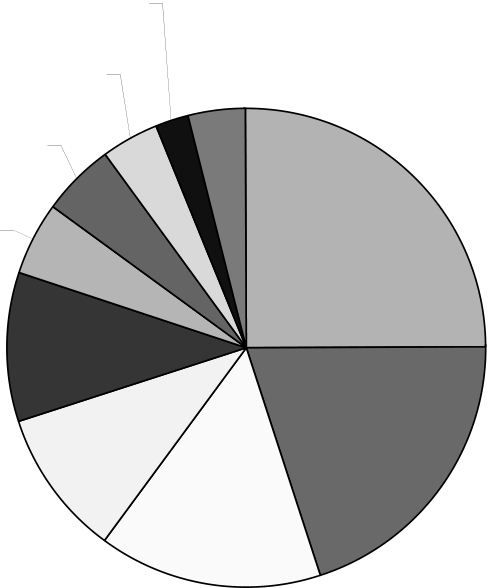

|
|---|
The following figures display a typical b-school class distribution of undergraduate majors and professional experience:
Figure 1: Undergraduate majors of students at a typical business school
Natural Science
10%Engineering
17%
| 14% |
|---|
Undergraduate
2%
Marketing/Sales
15%
| Applicant Profiles | 45 |
|---|
Not surprisingly, in order to maintain or increase heterogeneity, business schools are actively encouraging a diversity of backgrounds in the classroom. Students acknowl-edge that a variety of perspectives helps to create a dynamic learning environment in which duplication of opinions is rare. For an example of background variety, consider Omari’s study group during b-school:
Ë A U.S. middle school teacher who taught in Nepal for two years.
So how can these insights help you? First, if you’re considering business school and have a non-traditional background, don’t buy into the myth of homogeneity. If you have something to add to a school’s learning environment, then there is a spot for you. Secondly, you should take some time to reflect on how you can differentiate yourself based on your background and your career goals. Fortunately for you, that’s what this book is all about. Finally, once you get to b-school, don’t be afraid to share your unique experiences with your classmates. You’ll be admitted largely because of your interest-ing background, so make sure to help those around you benefit from what you’ve learned along the way.
It will definitely raise some eyebrows. This problem has become more common since the end of the dot-com boom, with some former vice presidents now explaining why they aspire to become junior consultants. If your high-level position came because you were a founding member of a business, then in admissions officers’ eyes you are an entrepreneur. This is good, although like all other entrepreneurs, you will need to
I’ve done something really unique. Do you think that will get me into business school?
The short answer is, “Not by itself.” The fact that you did something unique, whether it was professional or personal, will certainly help in setting you apart from the crowd. But that alone will definitely not get you in. Think hard about what your unique achieve-ment says about you, and how it fits into your overall application theme. Spending two years in South America helping locals build a farm is a great story, but it doesn’t help you much if you can’t relate it to the rest of your story. Also, just like every other experience that you draw upon, simply saying that you were involved in something is not enough. You need to show how you specifically contributed. Finally, a string of interesting experiences can actually hurt you if it is hard for admissions officers to make the connections between them. It is up to you to present your experiences in a way that makes sense to someone getting to know you through admissions essays or an interview.
 |
Understanding the |  |
|---|---|---|
| Application Components | ||
 |
The Tools
The Internet has drastically changed the way in which business school applications are completed. Imagine calling admissions departments to request applications, filling in data sheets by hand, or agonizing over essays while sitting behind a typewriter. Today, some schools won’t even accept paper applications. Thanks to the Internet revolution, you are now faced with two main online options:
For some schools, you will have more than one online option. In that case we sug-gest going with PrincteonReview.com, particularly if you have other applications in process with them. That way you will hopefully save yourself from reentering a lot of redundant information across applications. In either case, online applications are much more efficient than their paper counterparts. The time you will save, the more reliable electronic “paper trail” that you will have in case something gets lost, and the ability to more easily catch and correct errors all make online applications the way to go.
The Components
| Understanding the Application Components | 49 | |
|---|---|---|
| Ë |
|
|
| Ë |
|
|
| Ë | ||
| Ë | ||
| Ë | ||
| Ë |
The rest of the chapter will cover each of the application components in depth and provide you with strategies that you should integrate into your MBA game plan.
Data Sheets
Ë Employment history.
Ë Extracurricular activities.
Data sheets often have very short word limits. In many online systems, you simply won’t be allowed to go over the limit. Do yourself a huge favor and obey the limits given. Remember that your application will likely be read by a weary-eyed admissions officer who has to work his way through a shoulder-high stack of applications. Even
Naturally, there is not much that you can do about your undergraduate grades assuming that you are already out of college. Still, there are a couple of things you should know regarding transcripts and how they affect your application.
First, on a logistical note, give yourself plenty of time to receive your transcript(s) from your school(s). It can take anywhere from one week to a month to get a transcript back from a school (some offer rush processing), and you usually need to have a tran-script sent back to you in order to be able to send it off to your target business school. Start sending out requests as far in advance as possible. Also, it’s fine to send multiple transcript requests to a school at one time, but make sure that you are clear about the directions for each b-school. Some business schools require your college’s registrar to not only sign a transcript but also to fill out a form, while others ask for course descrip-tions to accompany a transcript. You can reduce the chance of error on your college’s end by giving them enough time and letting them know exactly what to do for each MBA application.
| Understanding the Application Components | 51 |
|---|
spiked drastically over the last 10 years. While we continue to emphasize the fact that the GMAT score is only one component of the application and should not be overly stressed, it certainly is a key factor in determining your success in applying. It is often said that a great GMAT score alone will never get you into a top business school, but a poor one can most certainly keep you out. We will take a look at the exam and then provide you with advice to help ensure that you don’t fall into the latter category.
GMAT background
|
|---|
Analysis of an issue
This section begins with a statement and then asks you to analyze the issue repre-sented by the statement and develop a short essay that takes a position on the issue.
Analysis of an argument
This section is almost identical to Analysis of an Issue, but instead of an issue you will be presented with an argument. After reading the argument, which is generally only a few sentences in length, you are asked to write an essay that evaluates the line of reasoning behind the argument, notes the explicit/implicit assumptions, provides ways in which the argument is weak, and cites evidence that would make the argument more compelling. You will be evaluated based on your ability to:
Quantitative section
The good news about the quantitative section of the GMAT is that it does not test advanced mathematical principles, such as multivariate calculus, differential equations,
Data Sufficiency
Data Sufficiency questions, on the other hand, are a different story. Contrary to popular belief that these types of questions were devised by a sadist, they are meant to test your ability to determine when there is enough information available to solve a problem. The automatic temptation is to try and actually solve these problems when all that is required is for you to note whether there is sufficient data to solve them.
D. EACH statement ALONE is sufficient to answer the question asked.
E. Statements (1) and (2) TOGETHER are NOT sufficient.
|
|---|
required by this section. In general, the section tests your ability to analyze and draw conclusions about written prose, identify and correct grammatical errors in English phrases, and assess arguments. The section is segmented into three types of questions: Reading Comprehension, Sentence Correction, and Critical Reasoning.
When selecting the correct answer, you are to evaluate the possibilities based on the requirements of standard written English. In particular, you should consider grammar, sentence structure, redundancy, word selection, and effectiveness.
Critical reasoning
Your GMAT score
So what’s the bottom line? The bottom line will be revealed through four scores: Total, Quantitative, Verbal, and Analytical Writing Assessment. The first three scores will be provided to you immediately after you complete the exam. Your AWA score will be sent to you a few weeks later. Here are the details on each score component.
| Total Score | |
|---|---|
| 750–800 | 99% |
| 740 | 98% |
| 720 | 98% |
| 700 | 96% |
| 680 | 90% |
| 660 | 87% |
| 640 | 87% |
| 620 | 81% |
| 600 | 70% |
| 580 | 64% |
| 560 | 57% |
| 540 | 50% |
| 520 | 44% |
| 500 | 37% |
Quantitative score
Quantitative scores are placed on a different scale than Total scores and range from 0 to 60. Given the quantitative rigor of business school curricula, most programs will place more of an emphasis on this score than Verbal, especially if you are lacking a quantitative background. The following table provides information on Quantitative scores and their corresponding percentiles.
| Total Score | |
|---|---|
| 51–60 | 99% |
| 50 | 96% |
| 48 | 87% |
| 46 | 80% |
| 44 | 74% |
| 42 | 67% |
| 40 | 62% |
| 38 | 55% |
| 36 | 48% |
| 34 | 41% |
| 32 | 35% |
| 30 | 29% |
Verbal score
Verbal scores are scaled in the same fashion as Quantitative scores. They, how-ever, are not comparable, because examinee performance on each part of the test dif-fers greatly. Obtaining a score of 40 on the Verbal section is much better than obtaining a score of 40 on the Quantitative section. These differences can be seen by comparing the Verbal score in Figure 6 to the Quantitative score table in Figure 5.
| Understanding the Application Components | 57 |
|---|
Figure 7: AWA scores and percentiles of examinees tested from January 1999 through December 2001
Figure 8: Top business schools’ 80% GMAT range
* Estimates
| Understanding the Application Components | 59 |
|---|
The score submission process occurs immediately after you complete the exam. As part of the $200 test-taking fee, you may submit your scores to up to five schools. Be-cause you have to choose which schools you want to receive the scores before you see the results, you should make an initial selection of target schools before the exam. Naturally, that list can, and, in many cases should, be revised after taking the exam. Once you submit your exam scores, you usually won’t have to send any additional GMAT information to the selected schools, other than maybe entering your scores into the schools’ application forms. The score report that the selected schools receive will in-clude scores from your three most recent GMAT exams. GMAC holds scores for 20 years, but most schools only accept scores that are less than 5 years old.
After the exam, you can send score reports to additional schools for a $25 per-school charge. The test-taking fee does not cover any post-exam score submissions even if you don’t select any schools on exam day.
Once you have your strategy in place, take the next step and sign up for the exam. A lot of applicants don’t sign up and lose their focus on studying as a result. If you are like most people, having an actual “D-day” set in stone will help intensify your focus and give you the motivation you need to get ready for the exam.
Know your strengths and weaknesses
Despite what you might hear, it is definitely possible to improve your score through concentrated training, so don’t get discouraged if you fall into the “can’t calculate tips”category. In general, we will focus our GMAT advice to the average to poor test-taker, so make adjustments accordingly if you can pull a 700 in your sleep.
Make a decision on whether to take a prep course
As the last bullet suggests, all GMAT preparation courses are not created equal. Different courses provide different offerings in terms of teacher training, sample ex-aminations, class size, and general preparation support. Here are the major players:
Ë Kaplan: Kaplan (www.kaplan.com) is the oldest player in the test- preparation market. In addition to the GMAT, it provides courses for all of the major standardized exams (SAT, ACT, GRE, MCAT, LSAT, etc.). As the first major entrant in the market, Kaplan has made a name for itself through its notoriously grueling exams. In terms of the GMAT, you can expect that your actual GMAT score will greatly exceed the scores you receive on Kaplan exams.
| Understanding the Application Components | 61 |
|---|
Should you decide to pass on taking a GMAT preparation course or decide to take on additional study outside of your GMAT preparation course (which many applicants decide to do), here are some suggestions that successful applicants have found to be helpful.
Become familiar with exam strategy
The other integral part of your preparation should be POWERPREP test prepa-ration software. POWERPREP can be downloaded for free from www.mba.com and allows users to take two actual GMAT exams. Placing yourself under actual exam con-ditions can be extremely beneficial as you get a feel for timing, how the algorithm works, and the overall length of the exam. Unfortunately, POWERPREP questions are drawn from the same bank as questions in The Official Guide for GMAT Review were drawn, so you will see overlap. Nonetheless, applicants continuously state that these two re-sources were invaluable in their GMAT preparation.
It can be easy to get discouraged after reading your 15th science-based reading comprehension passage and getting all of the questions wrong. It can be even more discouraging to take the GMAT once or twice and not achieve the score for which you are aiming. It is important in those times to target the areas that are bringing your score down and attack them veraciously. Some applicants have found one-on-one GMAT tutoring to be helpful. Our suggestion is to make sure you’ve gained a strong understanding of how the exam works and are very familiar with the questions before looking for a tutor. Tutors can be extremely expensive (in excess of $2,000 for 15 hours), so it is in your best interest to learn as much as you can before going down that road.
In general, if you remain dedicated to studying and follow these tips, you should be in great shape on exam day.
| Understanding the Application Components | 63 |
|---|
How much of this is innate, and how much can be learned?
Because the GMAT is a test of analytical skill, rather than a subject-based exam, a mythology developed that a test-taker could not dramatically improve her score. Kaplan, and other pioneers in the test preparation industry, exposed the myth—and Veritas has completely shattered it. Applicants who have a history of scoring well on standard-ized examinations will almost certainly do well on the GMAT. On the other hand, those who do not innately possess those skills can still acquire them. All standardized examinations have patterns. We have completely deconstructed the GMAT and cre-ated proven strategies to help our students exploit those archetypes.
Poor time management is prevalent, but easily corrected. Some students race ahead, leaving valuable minutes unused. Other students move too slowly, sacrificing precious time on early problems and leaving far too little time for later, often more difficult, questions. We offer several practice exams and pacing strategies to help alleviate both weaknesses.
GMAC statistics indicate that students do not improve much from one test to an-other. However, we are convinced that many of those repeating students do not take active steps to radically improve their prospects, and their results reflect that apathy. On the other hand, our repeaters are encouraged to adopt Veritas methods before retaking the test. As a result, our students who previously took the GMAT still average a nearly 100 point increase, far above the average for all test-takers.
It seems like top schools’ mean GMAT scores keep creeping up. What do you think that’s all about?
| Understanding the Application Components | 65 |
|---|
Test of English as a Foreign Language (TOEFL)
If the GMAT is the mountain that applicants must conquer before receiving ad-mittance into a b-school program, then the TOEFL is generally considered little more than a speed bump. That’s not to say that the TOEFL is wholly insignificant, but an applicant who performs well on the verbal section of the GMAT shouldn’t have any problems with the TOEFL.
Ë Listening: Tests your ability to comprehend spoken English, as used in North America. You will hear a conversation, lecture, or classroom
Ë Writing: Tests your ability to write in English on an assigned topic. You will be asked to write a standard English essay that expounds on a topic and provides supporting details. This section is not computer-adaptive, as there is only one essay question to which you must respond.
The following is a summary of the TOEFL’s format and content:
| Questions | Timing | Section Type | |
|---|---|---|---|
| Listening | 30–49 | 40–60 min. | Computer –adaptive |
| Structure | 20–25 | 15–20 min. | Computer –adaptive |
| Reading | 44–55 | 70–90 min. | Non –adaptive |
| Writing | 1 | 30 min. | Non –adaptive |
When you hear people talking about their “TOEFL score,” they are generally re-ferring to their total 0 to 300 score. So what should you shoot for? B-schools tend to be more explicit in stating what their TOEFL requirements are versus their GMAT re-quirements. While you should definitely find out what your target schools’ TOEFL requirements are, top schools generally look for scores close to 260. Figure 10 provides the scores and percentiles of recent test-takers. You should also note that there is a separate scoring system for the paper exam. Figure 11 displays a comparison of the two scoring systems.
Figure 10: Scores and percentiles of examinees tested from July 2000 through
|
|
|---|
Similar to the AWA portion of the GMAT, the writing section of the TOEFL is scored separately from the rest of the exam. Scores on the writing section range from 0 to 6 and increase in half-point increments. Most schools don’t have a required score for the writing section like they might for the total score. Nonetheless, you should still spend some time practicing a few essays, so that you feel comfortable with the section. Figure 12 provides the scores and percentiles of recent test-takers on the writing sec-tion. Most successful applicants score above 4.0.
|
|---|
Because test-takers’ familiarity with English varies so greatly, it’s difficult to sug-gest an appropriate amount of preparation time. On average, applicants generally find about two to three months of preparation to be enough. Similar to GMAT prepara-tion, we suggest first gaining an understanding of exam strategy and then practicing on real TOEFL questions. For exam strategy, we suggest Peterson’s TOEFL Success. This book will provide you with an in-depth overview of the exam and specific tactics for each section. For practice on real TOEFL questions, you should pick up the TOEFL Preparation Kit. In addition to this book, ETS offers PowerPrep software for the TOEFL. You can download TOEFL PowerPrep from www.toefl.org. This site contains addi-tional resources in which you might be interested, so check it out when you have a chance.
Performing well on the TOEFL is vital to international applicants’ prospects of gaining acceptance to their target schools. By following these simple tips, you should be in great shape to do well on the exam.
| Understanding the Application Components | 69 |
|---|
Believe it or not, interviews are a relatively new phenomenon in the world of busi-ness school admissions. While many of the top programs conduct interviews “by invita-tion only,” nearly all of them have a stated goal of interviewing all of the applicants whom they eventually admit. Other b-schools make interviews optional, but highly rec-ommend them. Finally, some b-schools outright require interviews for all applicants. No matter what your target schools’ policies are, there is a much greater chance that you will go through this ritual than if you had applied 10 years ago.
Why are interviews becoming a more important part of the admissions process? For one, business schools need more and more mechanisms to separate the great can-didates from the good ones, as the admissions process becomes more competitive. What better way to do that than to look an applicant in the eye and ask him why he wants to go to your school? Also, schools have become more and more careful about building strong communities and cohesive student bodies. Because each class is a melting pot of personalities, schools want to personally inspect each one of those personalities before granting admission.
Ë Are you ready for business school?
The interview is often the best way to get at these answers. The purpose of an interview isn’t to see how well you act under pressure or to try and trick you into re-vealing something terrible about yourself. Think of it as a way to reinforce what you have already said about yourself in the rest of your application and to help the admis-sions committee put a face to the name and numbers in your application. Yes, your interviewer may probe around certain weaknesses in your application or resume, but this is your chance to attack those weaknesses head-on and put them to rest.
Where you could be interviewed:
Ë On campus: Most interviews with admissions personnel and students take place on campus. The bottom line is that you should try your best to get to campus to do your interview. It might seem minor, especially be- cause many schools make off-campus interviews readily available, but visiting campus goes a long way in showing your interest in the school (especially if you live far away). Expect your on-campus interview to be
| Understanding the Application Components | 71 |
|---|
Ë Resume-based interview: Most schools’ interviews are “blind,” meaning that the interviewer has not seen your application before meeting with you. The most the interviewer will know about you is your resume, and some don’t even see this before the interview. In these cases, you can expect a lot of general questions to start things off, such as, “Tell me about yourself,” or “Walk me through your resume.” Because the interviewer knows very little about you in these situations, and you usually have just 30 to 60 minutes to sell yourself, it is critical that you know what messages you want to communicate, and that you hit all of them before time is up.
Ë Application-based interview: A few schools have their interviewers read through your entire application before the interview. In this case, the inter- viewer is generally an admissions officer. After reading your application, the interviewer will develop a picture of you in her mind, and will come to the interview prepared with specific questions. Expect some probing of weaknesses and questions around your motivations for moves that you’ve
Interview preparation
You are the best expert on you. You know why you’ve made the decisions that have led you to this point, what your strengths and weaknesses are, and (hopefully) where you want to go next in your career. The challenge is in figuring out how to best commu-nicate all of this to your interviewer, and in being ready to tell various stories from your past that illustrate your abilities.
Ë Tell me about yourself.
Ë Walk me through your resume.
The following is a fictitious example of how someone might answer “Tell me about yourself.” The answer to “Walk me through your resume” would be very similar, as you would still be pointing out specific achievements and provide a context for your career path:
| Understanding the Application Components | 73 |
|---|
Growing up, I was always interested in cars, and I remember helping my dad change the oil in our car when I was as young as 6 years old. By the time I got to high school, I knew that I wanted to become an engineer, so I devoted most of my energy to studying math and science. I went on to attend Ellicot University, where I earned my mechanical engineering degree. I was also very involved in my fraternity, where I was Treasurer, and I am proud to say that I started the Ellicot Racing Club, which has grown to more than 30 members.
Ë Giving reasons for the moves that he made in his career, and making those reasons consistent with his overall story.
Ë Naming some of his extracurricular activities. Remember, business schools don’t want someone who is married to his job!
These questions include:
Ë Why do you think now is the time for you to go back to school?
| Understanding the Application Components | 75 | |
|---|---|---|
| Ë | ||
| Ë | What do you think you will contribute that will be unique among your |
Ë Where do you see yourself in 10 years?
Some of these will overlap with the previous questions. Don’t be surprised if you cover one of these areas in your elevator pitch, only to have your interviewer dig much deeper later in the interview. Most of these answers will come directly from your appli-cation. In your essays, you hopefully will do a good job of explaining your goals and why business school makes sense for you; now it is just a matter of verbalizing these reasons.
There is a popular technique that successful applicants use to answer these kinds of questions. Most of your answers will ideally be broken down into the situation that you
| Question | Situation | Action | Result |
|---|---|---|---|
|
|
||
| Discuss a project that required the use of your analytical skills. |
|||
|
|
As mentioned before, two places where applicants often fail are in not stating what the results were, and in failing to mention what they specifically did to help reach a goal. Interviewers will be much more impressed if you can point to tangible results that came about as a direct result of what you did. Saying “We gained $5 million in business because of the ideas I implemented to make the product more reliable,” is much more powerful than saying “We gained new business by making the product better.” Be spe-cific about what you did, and the results that you created.
This framework will work for nearly any question in which you’re asked to describe a situation that you faced and how you resolved it. Ideally, you will be able to prepare for the questions that you are most likely to receive, and to outline an answer for each using the SAR framework. The great thing about SAR, though, is that it also helps you organize your verbal answers to questions that you didn’t anticipate. If you find your-self faced with a question like this, take a deep breath, think about an example that could be used to answer the question, and start talking in the SAR format. If you find yourself still talking about the situation after a minute, move on and get to the meat of the story.
Ë Tell me about a situation where you had to persuade someone to agree with your point of view.
Ë Describe a time when you had to gain upper management’s support for an idea/proposal.
Teamwork
Ë Tell me about the toughest group that you ever worked in. What made it so tough, and how did you handle it?
| 78 | Your MBA Game Plan | |
|---|---|---|
| Ë |
Ë How have you dealt with a person who was difficult to work with?
Ethics
side of your job?
Innovation
Ë Tell me about a time when you had to analyze facts quickly, identify the
issues, and develop an action plan.
Ë Tell me about your most spectacular failure. What happened? What did
you learn?
Ë Describe a situation in which you wish you had acted differently with some-
one in your group.
in a later situation.
How to carry yourself in interview
If you have a stone-faced interviewer who won’t laugh at your jokes, don’t press the matter. Act professionally, answer the questions that are asked, and make sure to hit your main themes. In a way, these interviews can sometimes be easier because the interviewer’s business-like questions will more likely give you a chance to strut your stuff. If you have a downright hostile interviewer (which happens from time to time), don’t let yourself get flustered or goaded into an argument. Relax, think of it as the interviewer’s half-baked way of testing your mettle, and answer the questions as they come. Don’t be argumentative, but don’t be afraid to be assertive, either. A hostile interviewer may be looking for poise and confidence more than anything else, so make sure to demonstrate these.
At the end of the interview, ask a couple good questions. Good questions don’t have answers that you could have gotten from the school’s Website or brochure. If you are interviewing with an alum or a student, asking about her experience is always a good place to start. Similarly, if you are interviewing with an admissions counselor or a faculty member, asking about the direction of the curriculum will generally generate an interesting response.
applicants insist outweighs e-mail’s “speed factor.” The bottom line is that this is not a decision worth losing sleep over, as it won’t have an impact on the school’s decision to admit you. You should choose the method with which you feel most comfortable. Regardless of the communication method, keep it brief and try to echo one or two topics that were discussed during the interview.
Our view is that interviewing will continue to become a more important applica-tion component with time. Schools consistently mention that it is a great way to differ-entiate applicants. It is important that you understand how to make your story come alive during the interview. Just as important, you should communicate a distinct pas-sion for the school and its mission. Demonstrating this level of fit and desire will get you one step closer to acceptance.
The rest of this section will review what admissions committees typically look for in essays, essay types that candidates predictably come across, samples of successful essays, and a prescription for how to approach the writing process.
What are admissions committees looking for in the essays?
Ë Structure and parameters: Maintaining an organized structure and a logical flow of ideas will help increase the impact of your statements. Consider, especially for longer essays, using headers to help guide the reader. Another consideration in terms of structure is word usage. While you certainly want to be descriptive in your writing, stay away from eso- teric vocabulary. Your goal is to effectively communicate ideas, not to show off your knowledge of the English language. Finally, make sure that you observe word limits. As a rule, you shouldn’t surpass word limits by more than 10 percent. Going beyond that can be an easy way to buy a “ding.” Remember that admissions counselors are reviewing thousands of applications, so they can be very sensitive to applicants who don’t re- spect word limits.
Essay types
Ë Ethics.
Ë Personal philosophy.
| 82 | Your MBA Game Plan | |
|---|---|---|
| Ë | ||
| Ë |
|
The types of essays that a school includes on its application are a reflection of that school’s approach to learning and the sort of applicant for which it looks. Therefore, it is imperative for you to understand the implications that underlie the essay questions. While we will cover the implications, it is important to note that essays don’t always fall into one of these discrete buckets. For example, a question might ask about your approach to leading teams, which obviously touches upon both the teamwork and leadership themes.
Many times this question type will ask for a summary of your professional back-ground and then ask you to relate it to the school and your career goals. Be careful not to simply rehash your resume. Rather, provide some context as to why you’ve made the choices that have led you to where you are today. The three components (professional background, school, future goals) should be linked in a fluid manner. You should high-light your strengths, outline your future goals, and then underscore how the school will help you build additional strengths in order to achieve those goals.
Some examples of questions that fall into this type:
Sample essay
Briefly assess your career progress to date. Elaborate on your future career plans and your motivation for pursuing a graduate degree at the Kellogg School.
B-schools’ increased emphasis on leadership is reflected in the large proliferation of this essay type. Many schools even have more than one question of this type on their applications. Questions will generally ask you to describe a situation in which you dis-played leadership, initiative, and/or creativity. Schools are trying to gain an understanding of your approach to leadership and the style(s) you employ when the situation calls for it.
These are great questions for utilizing the SAR framework, which was discussed in the interview section. It is important that you cover each component of SAR in order
Ë Describe a situation where leadership and teamwork were critical to the out- come of a project in which you were directly involved. What did you learn from the experience and how have you applied what you learned to other situations? (University of Pennsylvania—The Wharton School)
Ë Please give an example of when you had an impact on a person, group, or organization. Please describe the situation, your actions, and the results.
The thing I remember most about my first day as a Regional Manager at Global Rent-A-Car is that no one else wanted to be there. In fact, one of my new employees mentioned that he did not enjoy coming to work because he had nothing to show for it. I understood what he meant: The office was last in every category—profit numbers, customer service, and fleet growth. Even more interesting to me was when he mentioned that he did not trust the other employees in the office because he felt like no one wanted the office to be a success. I began to realize
|
|---|
As our team began to trust each other on a personal level, they began to trust each other on a professional one. I encour-aged one employee who felt “trapped” in the office all day, to take donuts to the corporate accounts in our area. At the end of the month we sat down and counted the number of referrals we had received from her sales calls. When she saw the increase in referrals from the month before, she began to realize that she was truly making a difference in our profits. She began to en-courage the other employees to become involved in the market-
|
|---|
Teamwork
While many essays on leadership dedicate a portion of the question to teamwork, there are some that focus purely on the interactions and relationships that you have with others. We consider these “genuine” teamwork questions. The admission com-mittee is looking to see how you communicate and cooperate in a group environment. Therefore, expressing your interpersonal skills is an essential part of answering these types of questions.
| Understanding the Application Components | 87 |
|---|
Sample essay
Describe an experience in which the relationships you developed enhanced the out-come of a team effort. (Columbia Business School)
tor, I asked the choir director if each U.S. choir member could partner with a French choir member. The director agreed that having us pair off would be a good relationship builder and I was soon chatting it up with my partner, Serge.
Over the next few weeks, Serge and I became inseparable. I learned that despite the initial surface differences that existed, we were very similar at the root. We both wanted respect, under-standing, and the opportunity to succeed. Furthermore, I was amazed at the new perspectives and insights on life that I gained from him. The result was that I not only developed my vocal talents, but also realized a new appreciation for other cultures
|
|---|
Ethics
(Northwestern University—Kellogg)
Sample essay
|
|
|---|
Needless to say, he wasn’t pleased with my stance. A short time after our discussion, I was removed from the project. Over time, I discovered that the company had a history of conducting
|
|---|
Personal philosophy
Ë What unique personal qualities and/or life experiences distinguish you from other applicants? (University of Rochester—Simon)
Ë Imagine that you will be taking a 72 hour car ride with two other individu- als. If you could choose your travel companions, whom would you choose and why? (These individuals can be living or deceased.) (University of Maryland—Smith)
My middle name is Carlson. Carlson is a family name, passed on to me from my grandfather Michael Carlson
Stevenson. It is a representation of the heritage and the legacy that I have been bestowed. It is also a reflection of the standard to which I will be held. In every facet of his life, Grandfather has been a visionary striving for excellence. He has extended his vi-sion through education and servitude. Expanding the legacy of
As a public servant, Grandfather is well-known both do-mestically and internationally. In addition to his education ini-tiatives, Grandfather has served his local community through the church that he pastors. Community service functions have included: Feeding and clothing the needy, and supplying finan-cial support for area building projects. At an international level, Grandfather has provided support to initiatives in more than five nations, such as Haiti, Ghana, and Liberia. On several
|
Your MBA Game Plan | |
|---|---|---|
|
||
The closing is nicely linked back to the opening.
This essay type calls for applicants to provide a perspective on themselves. That perspective is often asked to be given in an evaluation style. The admissions committee is looking to see how you view yourself in terms of strengths and growth opportunities. Although you certainly don’t want to cast yourself as inept, describing one or two areas in which you can develop is as important as depicting your strengths. It is important because the committee is interested to know how you can benefit from its learning model, so make sure you describe a connection between your growth areas and the school’s strengths.
Ë You have been selected as a member of the Kellogg Admissions Committee. Please provide a brief evaluative assessment of your file. (Northwestern University—Kellogg)
Ë If you could change one characteristic about yourself, what would it be? (UC Berkeley—Haas)
The Japanese have a concept known as “kaizen,” which roughly translated means continuous improvement. In recent history, this term has become most closely associated with the improvement of manufacturing operations and adopted as a mantra by several companies. However, the original meaning of the word kaizen carries an even more noble intent than busi-ness success—its intent is a successful life. A person adopting the philosophy of kaizen knows that human perfection is unat-tainable, yet strives to achieve it every day. Following this phi-losophy means always acting in a manner that increases knowledge and leads to personal development. Having always been a highly motivated person, this concept struck a chord with me and I adopted the philosophy of kaizen, making self-improvement a daily goal.
|
|---|
My broad educational and professional experiences devel-oped my unique perspectives into business. Having examined companies from both an external shareholder view as a securities analyst and from an internal management perspective, I have insight into both the challenges faced by companies in develop-ing and implementing strategic direction and the shareholder
|
|||
|---|---|---|---|
| ues | global | professional | |
|
|||
I hope to be able to build upon my strengths and address my weaknesses over the next year at INSEAD, as I continue to
Some examples of questions that fall into this type:
Ë Outside of work I… (Northwestern—Kellogg)
Over the last 10 years I have choreographed numerous folk dances for audiences of over 5,000 people. Each performance is significantly different. Two years ago, I choreographed a dance for 16 women. Each of us carried candles throughout the per-formance, adding effervescence to execution. The following year, I modified a traditional Swedish dance that manipulates pieces of ribbon on a central pole. As part of a grand finale act, I,
|
|
|---|
| interview. |
Diversity
Diversity essays can be similar to personal philosophy essays in that they are asked in an attempt to find out how you are unique. However, diversity essays differ in that they will frequently ask how your uniqueness will contribute to the classroom.
How will your distinctiveness enrich our learning environment and enhance your prospects for success as a leader? (University of Virgini—Darden)
Ë Describe how your skills, knowledge, and life experiences could benefit po- tential classmates. (Purdue University—Krannert)
Over the course of my basketball-playing career, I have captained my high school and college varsity basketball teams, represented the state of California in a national invitational, and led the country in free-throw shooting accuracy. These in-dividual successes came as a result of hard work, personal sac-rifice, and commitment. However, as I matured as a person and leader, I recognized that these individual accomplishments meant nothing when compared to team victories and champi-onships. I learned an early lesson in teamwork, and the poten-
|
|---|
|
|
|---|
Professional experience
|
|
|---|
Describe your professional work experience since earning your bachelor’s degree and discuss how you chose your career path. (Duke University—Fuqua)
After graduating from Coggins University with a Bachelor’s degree in business, I took a job with Gardner Technologies, a company that sells data analysis tools for large businesses. All new Gardner employees must pass an intensive six week data-base “boot camp,” and I came away from my training with a deep understanding of database technology and an apprecia-
|
|
|---|
In my first year, my team had some great successes, includ-ing improving our promotion conversion rates by 50 percent through the use of new database targeting techniques. We also introduced a successful new line of online seminars that teach paying customers about a range of personal finance topics. My most satisfying personal accomplishment was leading the mar-ket research for and launch of a new investment newsletter, which is now our most profitable premium service.
Earlier this year, I was promoted to the role of senior mar-keting manager, and I now report to the company’s vice presi-dent of marketing. With the title have come new responsibilities, including the goal of generating $2.3 million in revenue for our existing products, and leading the marketing launch of a new financial advisory service that is expected to generate $5 million in its first year. I am currently the only person in the
|
|---|
Failure
Some examples of questions that fall into this type:
Ë Describe a failure or setback in your life. How did you overcome this setback? What, if anything, would you do differently if confronted with this situation again? (University of Michigan Business School)
|
|
|---|
a colossal mistake on my first assignment.
I was charged with investigating the appropriate approach to taking out a bunker that housed some of the illegal weaponry uncovered by the inspection team. Eager to prove myself in a new environment and uncomfortable asking for assistance, I went to work. Using modeling software, I created a blast pat-tern to depict the strikes’ destructive radius. Simply following the step-by-step training that I received, I did not acknowledge
| Understanding the Application Components | 101 |
|---|
I was relegated to observer status for my remaining week on site, making the lesson stick, and turning me into a better of-ficer and person. I learned that computers and procedures are simply tools, but teamwork and inter-personal communication lead to real understanding. By performing my analysis alone rather than engaging the experts around me, I hampered the mission. Furthermore, I learned that by asking questions of the people around me I can gain access to a wealth of information that otherwise remains underutilized. Six months later, when I ran my own team in Bosnia, I turned these realizations into
|
|---|
The purpose of the essay is to allow applicants to discuss any evaluation criterion for which they might appear to be an outlier. The essay allows the applicant to attack the glaring weakness head on and provide additional information as to why it really isn’t a weakness, or how the applicant is addressing the weakness. Good reasons for using this essay include addressing a GMAT that falls below the school’s 80 percent mark, pointing out that you worked 30 hours a week to pay for your undergrad tu-ition (which affected your GPA) or explaining some other extraordinary circumstance.
(Indiana University—Kelley)
Ë Please provide additional information about whatever else you would like the Admissions Committee to know. (MIT-Sloan)
|
|---|
| Understanding the Application Components | 103 |
|---|
These victories did not, however, preclude my attempts to succeed on the GMAT examination. In fact, I modified my ap-proach to the exam several times, dedicated over a year to studying, and even worked with a tutor for a four-month period. Taking over 20 practice exams and mastering more than 4,000 practice problems, I tried to push beyond my standardized test anxiety
aberration. I am the outlier.
Final thoughts on essays
Ë Make edits to your essays in several rounds. You will constantly make revi- sions to your essays as you find better ways to express yourself and different methods for highlighting your attributes. As such, you should look at essay writing as an repetitive process that ultimately results in a masterpiece. You should never submit an essay with which you are unsatisfied.
Ë When you are done with your essays, set them aside for a of couple days before submitting them. Sometimes applicants get caught up in the writ- ing and editing process and simply want to get the essays out the door as soon as possible so that they can check that task off the list. This mentality is certainly understandable, but can be detrimental as in many cases it leads to essays that have been rushed. By leaving completed essays alone for a couple of days, you will be able to read them with a fresh perspective, and will most likely be able to evaluate them better.
Who should write your recommendations?
More than anything, your recommenders need to know you well. You may be able to get a letter from your Executive Vice President and CEO, but if they haven’t worked with you much, it will be very apparent in your recommendations. Admissions officers evaluate a recommendation based on its content much more than on the name signed at the bottom of the letter, so keep that in mind.
What should they say?
Your recommendations should support the position you establish for yourself in your other application components. They should add depth to this position by citing examples that go beyond what you cover in your own essays.
How can you make sure they’re saying the right things?
Ah yes, the time-honored question. How much coaching is too much, and what do you do if you’re afraid that your manager can’t write an effective recommendation? It depends on several issues.
Sample recommendation
The following is a sample recommendation that includes typical questions found on numerous applications. Note the recommender’s style, as she illustrates the applicant’s strengths and doesn’t merely state them. We’ve highlighted the aspects of this recommendation that we feel are especially strong.
|
|---|
Kramer-Dover Consulting
Over the next eight months, as I moved on to another cli-ent, my interaction with Shannan was less frequent. Our con-tact was mainly during meetings when our Business Unit professionals met to further our thinking and better develop our deliverables that we used at our clients. Shannan took a lead role in helping develop many of our tools, which I subsequently used for other clients. At one time, I had Shannan come to my client site for a few weeks to help “kick-start” our engagement by training other consultants on our tools. The client was so impressed by Shannan’s expertise that he begged me to place her on the project. Shannan continued to play an advisory role and we completed the project in record time. The client was able to reduce operational costs by more than $100 million, due in large part to Shannan.
For the past eight months, Shannan has been reporting di-rectly to me in another Outsourcing engagement at another large telecommunications client. We interact several times a day due to the complexity and sensitivity of the client and Shannan’s key leadership role on the team.
| Understanding the Application Components | 109 |
|---|
Ë Client Relationship: Our current engagement started as a small assignment with a minimal span of influence. Largely due to the development of solid relationships with our client, we were able to create a significant role with the client in one of its key strategic areas. Shannan played a major role in developing that relationship.
to ask questions of. Many consultants and clients refer to her on a wide range of issues including finance, in-dustry information, regulatory interpretation, and con-
| These bullet points really high-light Shannan’s strengths and | ||
|---|---|---|
| 3. | ||
Shannan’s development needs revolve around gaining more high-level experience in the consulting profession. These types of experiences include:
Ë Conducting formal performance reviews and career de- velopment discussions with subordinates within the firm.
Shannan is a very well-rounded individual, professionally and personally, which makes working with her enjoyable. She is not one-dimensional, and always has some insight or anecdote to share with a team. She epitomizes Kramer-Dover’s core at-tributes of integrity, teamwork, flexibility, leadership, reliability, and professionalism.
5. Comment on the applicant’s personal integrity.
I rate a person’s integrity and behavior based on how their peers and clients perceive them. Shannan has an enormous amount of respect. People enjoy being around her. They can“bank” on her answers to their questions as being accurate. Shannan conducts herself in a very professional manner under very stressful conditions. She is a role model for new consult-ants in our firm. I trust Shannan to perform with the utmost integrity and accountability in all aspects of her profession.
Additionally, Shannan has helped create a lot of internal interest for the telecommunications industry in general and spe-cifically our Outsourcing Business Unit. Although I am not part of her region, it is my sense that Shannan is very popular within
her peer group. I receive many phone calls from consultants in her region who would love to be part of our projects. We have been able to staff some of those consultants in large part due to Shannan’s influence. Her presence is a signal to others that it must be interesting to work on our engagements. This impact has resulted in large growth in terms of the number of projects we sell in addition to the number of consultants we have been able to staff.
9. If you have additional comments that you think would assist the Admissions Committee in making this decision, please add them here.
Shannan is the best all-around consultant I’ve had the op-portunity to work with. She has become an invaluable resource to numerous employees in our firm, and to our clients. She has managed to do outstanding work in our difficult working envi-ronment through the use of her leadership, teamwork, analyti-cal, personal, social, and all-around consulting skills. She has managed to meet the ultimate professional challenge—earn respect through outstanding professional effort and achieve
| Strong closing that again touches upon Shannan’s main strengths. |
|---|
Resume
In many ways, preparing a resume or curriculum vitae for your b-school applica-tions seems redundant. After all, you are already required to report your employ-ment history in the data sheets and expound on your professional experiences and career goals in the essays. So what’s the point of requiring the resume? For one, the resume summarizes your background into one page. This allows the admissions com-mittee to get a high-level understanding of where you’re coming from and what you’ve accomplished. Secondly, your resume will often be the only reference point that your admissions interviewer has on you. For those two reasons, it’s important that you
| Understanding the Application Components | 113 |
|---|
In general though, your resume should consist of three sections: education, experi-ence, and additional. The commonly followed rule is that if you are coming out of school, you should place the education section first, but in other cases, the experience section should be placed first. The placement of one in front of the other is supposed to reflect their level of relative importance based on where you are in your career. In terms of business school admissions, your academic background is just as important as your professional background, so you have some flexibility here in terms of placement. If you follow a business school’s format, then the education section will almost cer-tainly come first.
Content
statements, such as “Interfaced with Sales and Marketing in order to evaluate product potential.” This statement is of little value to the resume reviewer and basically just takes up space. Your focus should be on providing the reviewer with hard numbers, so that she can see how your actions translate into success. Let’s take another look at how this statement could be phrased: “Worked with seven members of Sales and Marketing in evaluating a new product with $125 million revenue potential. Evaluation led to eventual launch and 35 percent market share.” Certainly this approach takes up more room, but it is more effective than wasting space with esoteric statements about your contributions.
To serve as an example, consider the case of a fictitious applicant named Stephen Pearson. Stephen’s career goal is to work for a venture capital firm, focusing on high-tech investments. Take a look at Stephen’s resume and pay particular attention to how he focuses on actions and results. His resume certainly isn’t perfect, but it does do a nice job of touching on each of the four dimensions while showing fit with his career goals. We’ve added some commentary to stress the aspects of the resume that we feel are truly solid.
spearson@coldmail.com
EDUCATION
Constructed more than 100 financial models including dis-counted cash flow, comparable company and accretion/ dilution analyses. Evaluated more than $4.5 billion potential
| Understanding the Application Components | 115 |
|---|
transactions including leveraged buyouts, acquisitions, and spin-offs. Worked with more than 10 advisory teams com-
|
|||
|---|---|---|---|
| Ë | |||
Ë Researched more than 40 companies in the high- technology sector to identify potential clients whose
the hosting of M&A seminars that more than 150 ex-ecutives attended and resulted in more than $75 mil-lion in business.
Ë Created financing strategy and raised more than $70 million for Schudmak Incorporated through debt and
|
|---|
Management Trainee
| Understanding the Application Components | 117 |
|---|
Ë A more limited offering that covers certain parts of your application, most often your essays. These services appeal to applicants who are confident that their application stories are sound, and want some help in fine tuning their message. Some consultants offer this “stripped-down” service as an alternative to an end-to-end service, while others strictly offer essay edit- ing services.
In terms of pricing, you can expect that access to such services will set you back anywhere from $50 to $4,000. Naturally, the more a consultant does for you, the more you will pay. Some will charge you a flat fee for their services, while others will charge you on a per-application or a per-essay basis.
Ë Why you chose your current employer.
Ë Evidence of success in your job.
Ë Which schools you are targeting.
So, cost aside, admissions consultants do tend to help people get in. Similar to GMAT prep courses, at the very least these services tend to provide a good kick in the pants for applicants who need someone looking over their shoulder, prodding them to get their recommendations in on time, etc. They’re also usually good essay editors, and they generally do know what admissions committees are looking for. But know that no admissions consultant (at least not any scrupulous one) will write your essays for you. He will push you, stretch your thinking, and help you remember accomplishments that you didn’t think would matter in your application, but he will not simply take your resume and spin it into a golden application. The bottom line is that only you can write your own story. Admissions counselors can help you discover it, but you’ll have to tell it.
Now let’s return to the big question of whether or not you should hire an admis-sions consultant, first by answering an easier question: Do you need these services? Almost always, the answer is no. Given enough time and the right resources (all of which add up to far less than the price of a consulting service), nearly anyone can re-search a school in depth, craft a compelling story, develop a strong set of essays, per-form well on the GMAT, get glowing recommendations, and nail the interview. In short, you can most likely do on your own all of the things that you would hire an admissions consultant to help you do. It’s just a matter of time, motivation, and re-sources (this book will play a large role in the last one).
| Understanding the Application Components | 119 |
|---|
Ë A glaring weakness: Some people will never get above a 600 on the GMAT, no matter how hard they try. In instances like these, an admissions con- sultant can help applicants bolster their perceived analytical abilities (of- ten by encouraging them to do the things that we advise in this book), and help them overcome weaknesses with an application that shines in every other way. More generally, consultants can sometimes help an applicant rise above a shortcoming that would otherwise keep him out of his target school.
Ë International applicants: Similar to the “no business experience” crowd, some international applicants may have a harder time getting their hands on sound application advice and information on their target schools, in which case admissions consultants can help. Also, consultants can help them with simple language barrier issues that could keep them from gain- ing admission.
Does it matter which round I apply in?
The old adage is, “the earlier you apply, the better.” Generally, admissions officers state that there is very little difference between the first and second rounds. Beyond round two, however, many schools fill just a handful of remaining seats, so your odds of getting in plummet dramatically. We recommend not even considering applying after the second round, unless you find yourself in an extreme circumstance. We recom-mend the first round above the second round for a couple of reasons. First, more appli-cants apply in round two than in any other round, meaning that you will have a better chance (even if it’s a slight one) of standing out in round one. Also, applying early helps to communicate your interest in the school, which is always a plus. Finally, applying in the first round means that you will probably receive responses from your schools in the January time frame. This is advantageous from a planning standpoint. After all, there is plenty of work to be done after you receive an admittance.
In comparison to the base and individual GMAT scores, the AWA doesn’t matter much at all. When was the last time you saw a b-school publish its average AWA score? In judging applicants’ writing ability, schools tend to emphasize their own essays much more than the AWA and pretty much glance at the score as an afterthought. With that said, you shouldn’t totally blow off the AWA. There are some cases in which the school will take a closer look at the score; most notably in a situation where admissions coun-selors suspect someone else other than the applicant responded to application essays. That alarm can be triggered when the applicant comes from a highly technical or inter-national background, has the essays of a literary genius and an AWA score below 4.0. Therefore, you should become familiar with this portion of the exam and attempt a few sample essays, but you shouldn’t spend nearly as much time preparing for it as you do preparing for the main sections of the GMAT.
| Understanding the Application Components | 121 |
|---|
Is it possible to increase my GMAT score more than a few points?
Just like everything else in the application process, scheduling an interview earlier rather than later should only help your chances (when it is actually up to you to sched-ule the interview). From a logistics perspective, scheduling early is beneficial because spots are taken very quickly. Friday interviews can be especially difficult to lock down. We recommend spending a great deal of time on your application, getting it done early, and then doing your interview shortly thereafter.
Should I always do an interview, even if it’s optional?
If I’m intending to return to my present company after graduation, what message should I convey?
This is something at which many applicants fail miserably. Uninspired by the fact that they will return to their present employer after business school, applicants who fall into this category tend to write about their career goals in a dispassionate manner. If you intend to return to your current company, then say so. It’s fine to acknowledge the fact that it’s the career path you would like to follow. However, you need to be very specific in demonstrating how an MBA will help improve your skills. Additionally, you need to demonstrate how you intend to have an impact on the future direction of the company. This doesn’t mean listing the titles you hope to achieve, but rather stating the problems you want to address and some form of innovation that you would like to use in addressing them. Simply highlighting the fact that you intend to return to XYZ con-sulting firm will make you sound just like 95 percent of your direct competitors. Go the extra step, and be explicit about what you will do that you can’t do without an MBA.
| Understanding the Application Components | 123 |
|---|
How many recommenders should I recruit?
You may only need two or three recommenders total, but it depends on how many schools you apply to, and on how busy your recommenders are. Start by recruiting your immediate supervisor or, if this isn’t possible, another coworker who knows you well and can comment on your professional abilities. You’ll then want to add one more col-league from your work, and perhaps someone who can comment on your abilities in another light, such as someone whom you know from an extracurricular activity. You can reasonably expect each person to complete at most three or four recommendations. More is possible, but you’ll risk spreading each recommender too thin. So, be ready to recruit more recommenders as needed, assuming that each additional recommender is also qualified to comment on your strengths and weaknesses. Ideally, though, your immedi-ate supervisor will complete a recommendation for every one of your target schools. Because most schools ask that one of your recommendations come from your supervi-sor, do everything in your power to make it easy for her to complete a recommendation for each one of your applications.
How do schools use the evaluation grid that recommenders are required to fill out?
Admissions officers know that most recommenders feel that they need to give “Out-standing” ratings for each trait in the evaluation grid, lest they hurt their applicant’s chances. They therefore don’t place too much emphasis on the grid, and instead spend most of their time reading the recommendation letter. Still, the grid communicates a good amount of information very quickly, and application readers will scan it to get an idea of what your strengths and weaknesses are. If your recommender gives you the absolute best rating in each category, then that actually doesn’t give the admissions committee much to go on (other than the fact that you’re amazing, which the rest of your recommendation had better support). If you receive “Outstanding” ratings for four categories and receive “Very Good” for the other two, then the admissions com-mittee will think about those two a bit more, and see what your recommender has to say about those traits elsewhere in the recommendation. In any case, what the grid says is less important than the supporting evidence that is presented in the written recom-mendation. Nonetheless, you probably don’t want your recommender giving you any-thing lower than the second rating. Anything below that will likely catch an application reader’s eye and cause him to dig deeper. Your main focus should be on arming your recommenders with examples that illustrate each of the traits in the grid will help you the most.
Developing Strategies for the Top Programs 125
5
 |
|---|
Great. You’re halfway there. Now comes the other—equally important—part: dem-onstrating how you and your skills are a good fit for each of your target schools. Appli-cants sometimes forget about this part of the process. After all, a lot of schools’ essay questions seem pretty similar. No harm in just copying and pasting, changing the school’s name, tweaking a few lines, and moving on, right? In reality, most applicants have done this with at least one application, but doing so means possibly missing what each school is really looking for.
Researching Schools
Ë 125 K
Ë Current students: Students are probably the most underutilized resource. Even if you don’t visit the campus, it’s easy to find business school stu- dents’ contact info on the Web. Find one with whom you have something in common and send her an e-mail. Some students are just too busy to have a real heart-to-heart with you, but odds are that you’ll easily find someone who’s willing to give you the skinny on the school. Think of a few things you want to know about life at the school and fire away. This is a safe way to ask candid questions about the school.
Ë Alumni: Alumni are especially helpful in answering questions about what life will be like after business school. Ask them about their experiences in school, but realize that schools evolve over time, so realize that someone who graduated 15 years ago probably had a pretty different experience than what you would face.
| Developing Strategies for the Top Programs | 127 |
|---|
Impact
Rankings have had a powerful effect on the business school world. Recruiters, admis-sions directors, faculty, students, and applicants all keep a close eye on them. Over time, most schools have made positive changes to their facilities, curricula, and recruiting pro-cesses as a result of issues that the media outlets have uncovered. If a business school makes a jump in the rankings, then the dean will most likely trumpet the success. Should a business school slip, however, then crisis management techniques often kick in. It is not unheard of for members of the business school community to be fired over a poor ranking.
The oldest and perhaps the most publicized modern ranking of business schools comes from BusinessWeek. Its ranking methodology focuses on three components: stu-dent evaluations (45 percent), recruiter evaluations (45 percent), and the schools’ in-tellectual capital (10 percent). BusinessWeek’sperspective is that customer evaluation (in this case students and recruiters) is what matters most in evaluating a business schools’abilities. The rankings are mainly based on responses to surveys taken by recent busi-ness school graduates and a majority of the recruiters who hire them. Because of the survey format, BusinessWeek’s rankings are always accompanied by detailed anecdotal information.
Ë Employment: Salary increase over three years, return on business school investment, career progress, achievement of post-MBA goals, job employ- ment success, and recruiter recommendations.
Ë Diversity and International: Women faculty, students, and board mem- bers; international faculty, students, and board members; international mobility and curriculum.
Many would argue, however, that the methodology has contributed to selection bias. By heavily weighting the GMAT score and undergraduate GPA, U.S. News may encourageadmissions committees to turn away applicants who might cause them to
| Developing Strategies for the Top Programs | 129 |
|---|
slip in the rankings. The academic peer evaluations have also raised eyebrows, as deans and program directors have an incentive to discount other business schools in their ratings.
So the big question remains, “How should I view the rankings?” The rankings should be viewed as another source of information, but definitely not as the be all, end all. If you decide to apply to the schools ranked 15–20 based on the assigned number alone, then you are probably making a bad choice. The high variation of where schools fall in the different rankings alone indicates that different schools will be better for you based on what you value. As such, rankings are a good starting point for researching schools, but shouldn’t be the focal point.
If you find yourself obsessing over the rankings (most of us do at some point), use your gut. Ask yourself: “Is there really a huge difference between the 10th-ranked school and the 15th-ranked school?” Probably not. There are differences, but they will be in the details, which you will uncover through your own research.
Financial Times 2003 Business School Rankings
| Developing Strategies for the Top Programs | 131 |
|---|
The shotgun camp
Members of the shotgun camp believe that applying to top business schools is like shoot-ing in the dark, so they use the biggest gun possible. They claim that the applicant selection process is essentially random, and they therefore target as many schools as possible. The thought is that in doing so, they will raise their overall chances of admittance. It can be easy to be seduced by the theory that the process is entirely random when you look at the low acceptance rates and hear stories of people getting into Stanford, but getting dinged by Samford. Although no one will deny that there is a certain level of “randomness” in the selection process, basing your application approach on that premise can have disastrous results. The more applications you add to the pile, the more difficult it will be to tailor them to your schools. You have to conduct more research, solicit more recommendations, and pro-duce more essays; not mention shell out more cash (application fees can cost up to $200 each).
How many schools should I apply to?
So the analogies are great, but where are the tangible numbers? We suggest that the average applicant apply to three or four schools. This allows you to target one stretch school, one safety school, and one or two schools that seem right within your range. Naturally, many external factors such as significant others, or financial or geo-graphical constraints can present situations that call for applying to a different number
As you explore potential target schools, you will notice that many of the brochures look and sound the same. Indeed, there are several business school trends that have pushed schools to adopt similar learning models. Once you visit the schools, however, and dig a little deeper, you will begin to notice that there are larger differences across schools then you initially thought. Three differences across schools that you should pay special attention to are the learning model, typical career paths of graduates, and the culture.
The learning model
As you research schools, you will discover that they all place different emphases on these three approaches. When reviewing the learning models, consider the type of academic environment from which you will benefit most. Also, know that business schools differ in terms of the amount of work (inside and outside of class) that students typically must complete. You should be able to get a decent feel of a b-school’s workload
| Developing Strategies for the Top Programs | 133 |
|---|
by speaking with students and reviewing curriculum requirements. Beware, however, of asking students to compare the workload at their school to that of other schools, as students are notorious for exaggerating cross-school differences.
While the learning model and recruiting opportunities may be the most obvious ar-eas to research prior to selecting your target schools, examining schools’ cultures is just as important. The best way to get a feel for a school’s culture is to visit the campus, chat with students, and check out a class. Each school has its own mission, values, and norms. This has a powerful effect on the student experience, and you should take the time to gain an understanding of the type of culture with which you best fit prior to deciding on your target schools. Also, don’t forget that any school’s culture is the sum of the individual personalities at the school. When you visit, make sure to meet students and ask yourself“Do these seem like the kind of people I’d want to study with at 2 a.m.?”
Application Strategies for 30 Top Business Schools
The purpose here is to apply the dimension framework described in Chapter 2 to 30 schools and to give you some school-specific information that you can utilize in developing application strategies for your target schools. These 30 business school ap-plication strategies each provide application requirements, school background infor-mation, and advice on how to approach the school’s application. The application strategies also feature a section called “insider information,” which highlights a trend that you can leverage in your application or a key insight that insiders say should be featured in your approach. Finally, we’ve selected up to four other schools that call for a similar application strategy. Please note that this is not to say that the schools are exactly alike, but rather that applicants have been successful in employing similar strat-egies across those schools.
Don’t read too much into the 30 schools we selected. We reviewed all of the major rankings and picked 30 schools, both domestic and international, that received broad support as top business schools.
Application due dates (first, second, third, and fourth round): Nov. 15, Jan. 15, Mar. 31, Apr. 30.
Requirements
Ë Application fee: $100.
School at a glance
| Developing Strategies for the Top Programs | 135 |
|---|
Yield: 54 percent
Mean undergraduate GPA: 3.3
Women: 23 percent
Minority: 22 percent
Carnegie Mellon also touts its practical, hands-on approach to learning, exempli-fied by its Management Game, a highly involved computer simulation that runs from the last mini-semester of the first year through the first semester of the second year. Student teams each run their own simulated business, making decisions af-fecting operations, finance, marketing, and labor relations. Adding a level of realism to the game, each team is assigned a board of directors, comprised of local business leaders.
Insider information
You won’t find any majors at Carnegie Mellon, or any academic departments for that matter. The school promotes an interdisciplinary approach to learning, encourag-ing faculty members from different fields to teach courses together. The result is a fairly broad approach to management education. While students can choose from con-centrations in 12 different subjects, most tend to choose multiple concentrations, fur-ther broadening their learning. While Carnegie Mellon’s deep analytical focus makes it very different from other general management programs such as Harvard or Darden, keep the school’s interdisciplinary philosophy in mind as you build your application story.
Ë University of Rochester (Simon).
Columbia Business School
Ë Essays: Four (one of 1,000 words, two of 500 words, and one of 250 words).
| Developing Strategies for the Top Programs | 137 | |
|---|---|---|
| Ë |
|
|
| Ë | Recommendations: Two, with one preferably coming from your direct |
Dean (start of tenure): Meyer Feldberg (1989)
Admissions director: Linda Meehan
Mean GMAT: 705
Middle 80 percent GMAT: 670-750
Your Columbia application strategy
Make no mistake, Columbia is a finance school above all else. Students rave about the school’s finance faculty and the access that they have to top Wall Street executives. The alumni network doesn’t hurt either—nearly every Wall Street firm is stacked with Columbia alumni. The result is that most finance-minded applicants consider Colum-bia. If you are one of them, you will need to especially focus on differentiating yourself from a large pool of similar-sounding applicants. Therefore, start thinking now about what makes you different from the rest of the investment bankers (and aspiring bank-ers) who apply to Columbia. Chapter 3 should help in that regard.
The Fund acts less like a traditional business plan competition and more like a venture capital firm, taking an equity stake in any Columbia start-up with promise (with the school benefiting if the venture takes off). For students looking for a more conven-tional business plan competition, Columbia has joined forces with UC Berkeley’s Haas School of Business to run the Social Venture Competition, which provides seed money to promising start-ups whose goal is to have a positive social impact. The bottom line is that if you are interested in an MBA for entrepreneurial reasons, let the Columbia admissions committee hear about it in your essays and your interview.
Columbia also emphasizes the international aspect of its curriculum. Each semes-ter, the school’s Chazen Institute of International Business offers fellowships to up to four students for their work in advancing Columbia’s global approach both inside and outside of the school. The Chazen Institute also runs an exchange program that gives students the opportunity to study abroad at one of 22 partner schools, as well as partici-pate in international study tours. Keep this in mind as you craft your story for why you will fit in at Columbia.
Ë NYU (Stern).
Ë University of Pennsylvania (Wharton).
| Developing Strategies for the Top Programs | 139 |
|---|
Two Year Program application due dates (first, second, third round): Nov. 15, Jan. 15, Mar. 15.
Requirements
Ë Application fee: $200.
School at a glance
The values that are central to the Johnson program include: a dedication to ana-lytical rigor, an action-oriented approach to learning, and a collaborative learning en-vironment. Your application should highlight your ability to think in an analytical manner. This could manifest itself through a discussion of how you focus on developing solutions, your approach to analyzing problems, or an analytically driven business idea that you have. Analytical in this sense doesn’t purely mean numbers oriented (although Johnson will take a close look at your quantitativeitativeitative GMAT score), but rather it means based on rational and in-depth thought and examination. Examples you can provide along those lines will help you establish fit with the analytical strength Johnson values in addition to its application-focused learning model. As a member of the Johnson family, you will be expected to contribute to your classmates’ learning and to the school as a whole. Said in another way, Johnson is looking for applicants who are team play-ers. While you definitely shouldn’t shy away from publicizing your accomplishments, be careful not to come across as arrogant in tone and be sure that your recommenders reflect positively upon your teamwork skills.
| Developing Strategies for the Top Programs | 141 |
|---|
Insider information
The Immersion Learning curriculum is probably the best example of Johnson’s action-oriented approach to learning. Immersion Learning, also referred to as “the semester in reality,” is an experiential method that allows students to take a hands-on approach to functions such as: Managerial Finance, Investment Banking, Brand Man-agement, Manufacturing, and e-business. Students visit companies, work on actual busi-ness challenges, and are evaluated based on the solutions that they develop in response to those challenges. Discussion of Immersion Learning can be a great way to display your knowledge of the Johnson learning model.
Ë University of Virginia (Darden).
tmouth Colleggggge (T
Ë Essays: Five (four of 100 words, one of unlimited length answering a mini- case question).
Ë Interview: Required.
Admissions director: Kristine Laca
Program size: 470 full-time
Mean undergraduate GPA: 3.4
Mean GMAT: 698
Minority: 17 percent
Your Tuck application strategy
Tuck’s remote location means that it’s not for everyone. Some applicants, espe-cially those with spouses, often find it difficult to relocate to Hanover. To its credit, Tuck goes out of its way to make the transition a smooth one, often providing spouses and partners with full-time work around campus. Still, only slightly more than half of Tuck’s admitted applicants actually enroll in the program. This means two things for you: (1) Make sure that you really want to attend Tuck before you apply. It’s a great school, but its size and location sometimes turn people off. Save yourself a lot of time
| Developing Strategies for the Top Programs | 143 |
|---|
if you think these aspects of the program will be a problem for you. (2) Even more impor-tantly, you really need to demonstrate why Tuck is for you. Tuck’s students tend to be passionate about their school, and you need to demonstrate this same passion in your application. Visiting the school—especially for your interview—can go a long way to-ward helping you make your case. Also, think about applying in Tuck’s Early Action round (with applications due in mid-October) if you are sure that Tuck is where you want to be. This relatively new program is a great chance for you to show your commit-ment to the school.
Ë Duke University (Fuqua).
Ë Emory University (Goizueta).
Application due dates (first, second, third, fourth round): Oct. 31, Dec. 16, Jan. 30, Mar. 13.
Requirements
Ë Application fee: $175 online, $200 paper.
Program size: 700 full-time
Acceptance rate: 19 percent
Average years of work experience: 5.0
International: 34 percent
Young and small, Fuqua has an advantage over the business school competition with its innovative curriculum and approach to learning. Students have four terms (of six weeks each) per year, meaning that they get a taste of many more subjects than students at most other schools. Fuqua’s emphasis has traditionally been on turning out general managers, although recent graduate classes have skewed more towards marketing. The only concentration that the school offers is its Health Sector Man-agement (HSM) program, which takes advantage of the school’s location in Research Triangle Park in North Carolina. If you are interested in biotech, pharmaceuticals, medical devices, or healthcare management, take a close look at this program.
Fuqua has also been aggressive in giving its students opportunities to study abroad, and currently has reciprocal exchange programs with 25 international business schools. Its Global Academic Travel Experience (GATE) program provides students with the opportunity to travel abroad for a shorter period of time. GATE is extremely popular with students, with close to half of the class participating in the program for two weeks each year. Fuqua’s push to build its brand around the world means that it looks for applicants with global perspective. If you have international experience, be sure to emphasize it in your application. If you haven’t worked abroad, that’s okay. You definitely don’t need to lie about wanting to spend your next five years in Hong Kong. Just demonstrating a willingness to work with people of other backgrounds (and any experience that you might have in this area) is a great start.
| Developing Strategies for the Top Programs | 145 |
|---|
Fuqua has built a strong reputation, and it now attracts many of the same people who also apply to the Harvards and Whartons of the world. The downside for Fuqua is that some top applicants still view Fuqua as somewhat of a backup school, even though Fuqua’s acceptance rate is below 20 percent. This is evident in the school’s yield (per-centage of accepted students who enroll), which was 57 percent in 2001, more than 10 percent below that of other top schools. The school therefore looks for applicants who are interested in Fuqua for what it offers, not just because it’s listed next to the other big names in the rankings. In other words, the admissions committee wants to be sure that if they accept you, you will enroll. If you can demonstrate that you truly want to attend Fuqua—and why this is so—you will greatly improve your chances.
Schools that call for a similar approach
Ë Essays: Four (two of two pages, two of one page).
Ë Interview: Highly recommended.
Your Goizueta application strategy
Emory University’s Goizueta (pronounced: “goy-SWET-uh”) Business School is one of the smallest of the nation’s top programs, with just 170 entering the school’s traditional two-year MBA program each year. Like other small programs, Goizueta is noted for its close-knit culture and high student involvement in every aspect of the school. Student Action Groups give students a strong voice in many of the school’s departments, including admissions, curriculum development, marketing, and facilities planning. Not surprisingly, the school expects that each of its students will get involved in at least one opportunity to leave a mark on the school.
| Developing Strategies for the Top Programs | 147 |
|---|
While most schools prefer students with some amount of work experience, Goizueta explicitly states that students need at least a year of work experience in order to apply. It is therefore not surprising that its student body tends to skew slightly older than those of other top schools. Although all schools look for maturity in their applicants, Goizueta is clear about the importance of this dimension of your application. It is there-fore important to choose essay and interview stories that emphasize your own profes-sional maturity.
Insider information
Schools that call for a similar approach
Ë Cornell University (Johnson).
tion at a Glance
Application due dates (first, second, third round): Oct. 17, Jan. 7, Mar. 11.
Ë Resume.
Ë Application fee: $190.
| Developing Strategies for the Top Programs | 149 |
|---|
HBS is known as the quintessential general management program. In line with the mission of the school, students’ decision-making ability across multiple business disci-plines is the constant focal point. Students do not formally specialize in a particular aspect of business, as they do at most schools, and take the first year required curricu-lum in sections of 80–90 students.
The section experience is one of the defining aspects of the HBS learning model, as each student is expected to take on the responsibility of teaching her classmates. Stu-dents constantly draw from their own background and experiences, creating a dynamic atmosphere that is supplemented by the faculty’s insights. To ensure that classrooms are filled with numerous perspectives, students’ backgrounds are extremely diverse in nature. It is not uncommon for most sections to contain, lawyers, teachers, investment bankers, doctors, consultants, brand managers, professional athletes, military officers, and entrepreneurs. The required curriculum in the first year is followed by an entirely elective curriculum in the second year. Students utilize this year to further hone their decision-making abilities in areas that they believe will be the most beneficial for their careers.
can add credibility to your school’s reputation, thereby granting credibility to your en-tire application. Should you go down this path, however, make sure that the professor is in a position to comment on your leadership capabilities and on your professional goals. If the professor isn’t that familiar with you and your story, then it’s best to seek out a recommendation from a different source.
Being part of the HBS community is a life-long commitment. This is highlighted by the fact that the alumni network is often one of the first points that is raised when discussing HBS’s differentiating factors. It is therefore to your advantage to show ways in which you have been a champion for your alma mater. The admissions committee isn’t just concerned about what you will bring to the table during your time in the class-room, but also how you will remain involved with and support the school in the future.
Ë INSEAD.
Ë University of Virginia (Darden).
| Developing Strategies for the Top Programs | 151 |
|---|
Application due dates (first, second, third, fourth round): Dec. 1, Jan. 15, Mar. 1, Apr. 15.
Requirements
Ë Application fee: $75.
School at a glance
The initial 24 weeks of the first year are split into three sections: Grasping the Foun-dations of Management and Decision-making, Identifying New Business Opportunities, and Managing an Ongoing Enterprise Profitably. These sections consist of a total of 14 modules, each module building upon the lessons of the previous modules. The goal of the core curriculum is to provide students with tools and intuition that will be invaluable in making management decisions. As a checkpoint, mid-way through the core, students participate in a team-based case competition, which allows them to display the benefits of integrated learning. One way for you to display an appreciation for the Kelley approach is to discuss how the results of actions you’ve taken in a business environment have been beneficial to multiple functions and not just the one to which you belong.
While interviewing with Kelley is not required, it is encouraged. Nonetheless, only approximately 50 percent of applicants participate in the interview. The interview is an excellent opportunity for you to establish fit with the program as well as to display a true desire to attend the school. Your initiative will be duly noted by an admissions committee that is looking to increase its yield percentage.
| Developing Strategies for the Top Programs | 153 |
|---|
Schools that call for a similar approach
INSEAD
www.insead.edu/mba
ance,,,,, and Singpplication a
Ë Recommendations: Two, both should come from people who are familiar with your professional capabilities.
Ë Application fee: •200.
Due in-part to the abbreviated duration of the program, INSEAD tends to accept applicants with at least several of years work experience (more than 45 percent have more than five years). The school believes that students with more professional experi-ence are better able to adapt to the one-year curriculum and leverage it in their career development. Indeed, INSEAD takes career development very seriously, as each stu-dent is matched up with a mentor to assist with the process. The school even has tele-conferencing equipment readily available so that students can interview with firms who are unable to make the trip to campus. Your challenge is to present your professional experiences in a way that highlights your success in the workplace and your ability to contribute to the classroom. Despite INSEAD’s tendency to accept more experienced applicants, you may still want to consider applying if you are younger, as the school does accept a small number of less-experienced applicants each year (about 15 percent
| Developing Strategies for the Top Programs | 155 |
|---|
of students have two years or less). If you fall into this category, it is even more impor-tant that you emphasize the maturity dimension and discuss an array of experiences that are academic, professional, and personal in nature.
Ë Harvard Business School.
Ë University of London (London Business School).
Requirements
Ë Essays: Five (four of 500–800 words each including a cover letter, one of unlimited length).
Acceptance rate: 13 percent
Yield: 68 percent
International: 40 percent
Women: 27 percent
As expected, the school’s curriculum emphasizes the quantitative side of business. Courses such as Finance and Statistics are as quantitative as you would expect, but Sloan also encourages students to apply the skills that they learn in these classes to nearly all of their coursework. Graduates speak highly of the hard skills that they learned at Sloan, so make sure that this is what you want out of your MBA experience. To get in, you will have to demonstrate that you are comfortable utilizing numbers, through your GMAT score, previous coursework, or job experience.
Sloan’s curriculum is also notable for its emphasis of “management tracks,” instead of traditional majors. The idea behind these tracks is to provide students with a broad study approach to a certain functional area, such as Financial Engineering, Operations Management, and New Product and Venture Development. The tracks’ broad approach requires students to complete eight to 10 classes per track. Students can also create
| Developing Strategies for the Top Programs | 157 |
|---|
Sloan has a higher percentage of international students than nearly all of its peer schools—40 percent of the class of 2003 came from abroad. Sloan students therefore tend to be surrounded by international classmates wherever they go. If you are looking to gain international experience, or just want to meet people from new cultures, this is an aspect of the program that may appeal to you. Make sure you demonstrate your enthusiasm for the school’s diverse culture in your application, and make your case for why this matters to you, whether you are an American or an international applicant.
Schools that call for a similar approach
te Univvvvvererererersity (Eli Br
us.msu.edu/mba
East Lansing,,,,, MI
Requirements
Ë Essays: Two (one page each).
School at a glance
Dean (start of tenure): Robert B. Duncan (2002)
Mean GPA: 3.2
Mean GMAT: 639
Minority: 16 percent
Your Broad application strategy
| Developing Strategies for the Top Programs | 159 |
|---|
Over the last few years Broad has begun to make a name for itself through case competitions. Held around the globe, case competitions allow teams of three to six students to display their analytical, public speaking, and persuasion skills. Broad ac-tively encourages students to participate in these competitions and assists in students’preparation for them. The results speak for themselves, as Broad students have come away with high placements in a number of these competitions. If you have any interest in participating in case competitions, bring them up as a great discussion point.
Broad’s application is fairly compact in comparison to the applications of other top programs. With two short essays, the Broad application makes it more difficult for candidates to differentiate themselves from each other. As such, it is important that your baseline statistics (GMAT and GPA) are close to those of the current MBA class. This importance has been compounded as Broad looks to improve its baseline statistics in order to continue its movement up the rankings. Therefore, you should utilize the optional essay to address weaknesses in baseline statistics that are five percent below the means.
Ë Indiana University (Kelley).
Ë Purdue University (Krannert).
pplication a
Application due dates (first, second, third round): Dec. 1, Jan. 15, Mar. 15
Ë Resume.
Ë Application fee: $150.
Given Stern’s location, it is not surprising that a large number of grads pursue jobs on Wall Street, where the Stern name and alumni network are the strongest. Eight of the school’s top 10 recruiters are investment banks. Although Stern’s overall academic reputation is strong, most people consider its finance department to be by far the school’s greatest strength. If you are interested in working outside of finance, don’t rule out
| Developing Strategies for the Top Programs | 161 |
|---|
Stern, but know that finance is where most of the action has historically been. The school is aware of this perceived inequity and has been working hard to balance its strengths across disciplines.
With a yield in the low 50s, Stern gets stiff competition from the likes of Columbia and Wharton for finance-minded students. Showing the admissions committee that Stern really is where you want to be—and having convincing reasons for why this is the case—will greatly help your chances of being admitted.
Insider information
Schools that call for a similar approach
Ë Columbia Business School.
Requirements
Ë Essays: Six (three of two pages, three short essays).
School at a glance
Dean (start of tenure): Dipak Jain (2001)
Admissions director: Beth Flye
Program size: 1,250 full-time
Acceptance rate: 13 percent
Yield: 64 percent
Mean undergraduate GPA: 3.5
Mean GMAT: 700
Middle 80 percent GMAT: 660–750
Average years of work experience: 4.5
International: 33 percent
Women: 31 percent
Minority: 19 percent
| Developing Strategies for the Top Programs | 163 |
|---|
The school also has noted faculty in areas such as Strategy and Managerial Economics. Just as Finance is a more popular major at Kellogg than Marketing, the biggest recruit-ers at the other top schools—McKinsey, Boston Consulting Group, Goldman Sachs, etc.—also do more hiring at Kellogg than the biggest marketing-related firms.
As you would expect, Kellogg’s admissions office looks for teamwork-oriented applicants. “Sharks” or hot shots need not apply. This doesn’t mean that Kellogg looks for 600 touchy-feely people each year, but rather, it looks for applicants who know how to get things done when working with others. Think of the “desert island test”—if you can think of someone whom you’d hate to be stranded with on an island, then Kellogg probably doesn’t want that person, either.
Although Kellogg is best known for its teamwork approach, the school is increas-ingly positioning itself less as a place where students learn to be teamleaders, not merely team players. In other words, people who work well with others, but aren’t just follow-ers. The administration wants recruiters to come to Kellogg looking for their next gen-eration of leaders, rather than for marketing or finance experts who are easy to get along with. That means that Kellogg is looking for more outstanding leaders in the applicant pool. To this end, think of personal examples of how you’ve led teams toward a goal in the past. Most applicants will just think about teamwork in terms of how they helped others accomplish a goal, but show the admissions committee how you led a team to success and you’ll be in great shape.
Schools that call for a similar approach
pplication a
U.S. citizen and permanent resident application due dates (first, second, and third round): Nov. 1, Jan. 1, May. 15.
Ë Recommendations: Two, with one preferably coming from a direct supervisor.
Ë Resume.
Program size: 400 full-time
Acceptance rate: 30 percent
| Developing Strategies for the Top Programs | 165 |
|---|
Average years of work experience: 4.0
International: 36 percent
It’s not surprising to hear Krannert MBAs refer to their alma mater as “Techno MBA,” as the program regularly utilizes technology to support its hands-on learning philosophy. Many students choose to specialize in Information Systems, one of six func-tional specializations the school offers (the others are: Accounting, Finance, Market-ing, Operations Management, and Strategic Management). In addition to functional specializations, the school offers interdisciplinary concentrations in International Management, General Management, and Manufacturing and Technology Management. Discussion of your goals should include a small blurb on where you see one or two of these specializations coming into play.
Technology is used to simulate e-commerce transactions, the power of enterprise application integration, financial trading, and database architecture. In addition to these examples, Krannert provides numerous opportunities for its students to translate theory into application. The Student-Managed Investment Fund (SMIF) provides students with the opportunity to help manage a six-figure financial portfolio and distribute a portion of the gains to Krannert and other graduate programs. During the Digital In-formation Industry Simulation, students act as the CEO of a large technology com-pany, making decisions that have an impact on the results of the company. Krannert also offers MarkStrat3, another computer simulation that allows student teams to com-pete against one another, trying to win market share and increase profits in the high-tech industry. Providing an example in which you took an abstract idea and imple-mented it is a powerful way to highlight your fit with Krannert’s philosophy on translat-ing theory into application.
Krannert provides all of the benefits that come along with most small MBA pro-grams, including accessible faculty, a close-knit student community and an emphasis on teamwork. Immediately after beginning the program, you will be assigned to a four- or five-person team. Students within a team come from diverse professional backgrounds and spend time working on group assignments for the first eight weeks of class. Having strong team skills is important to succeeding in these groups, and is therefore some-thing upon which the admission committee will rate you. Use the essays to discuss your ability to contribute to a team.
Insider information
Ë Indiana University (Kelley).
hool of Business
Ë Essays: Two (both of unlimited length).
Ë Interview: By invitation only.
| Developing Strategies for the Top Programs | 167 |
|---|
School at a glance
Dean (start of tenure): Robert Joss (1999)
Mean GPA: 3.6 (estimate)
Mean GMAT: 725 (estimate)
Minority: 27 percent (estimate)
Your Stanford application strategy
Recommendations should be viewed as an extremely important aspect of your Stanford application. The admission committee will take a close look at your recom-mendations in evaluating your leadership potential and your teamwork capabilities. If there is one application in which you should avoid submitting generic recommenda-tions at all costs, this is it. Make sure that you follow the instructions closely and submit two professional recommendations and one peer recommendation.
Academic aptitude is a criterion that Stanford evaluates more rigorously than most other top b-schools. Because the curriculum is quantitatively heavy, the admissions committee will look closely for measures that indicate that you will be able to succeed within the learning model. Therefore, your GMAT score will be looked at closely in addition to your transcript(s). If your scores don’t reflect a high standard of analytical background, you will need to express it through your professional experiences and/or additional coursework. You should also be aware that while those accepted by Stanford come from a multitude of undergraduate institutions, a large majority attended “high prestige” universities. If you are not among this group, you should discuss your school’s strengths and your reasons for attending it.
The Stanford learning model doesn’t offer majors, but it does offer certificates in public management and global management. The Public Management Program (PMP)
| Developing Strategies for the Top Programs | 169 |
|---|
prepares students for positions in the social sector and the Global Management Pro-gram (GMP) prepares students for opportunities at a global level. Both certificates are supported by a large number of electives, programs, and career resources. More than one third of the student body pursues certificates in PMP or GMP, and Stanford is actively looking for ways in which it can augment these programs. Discussing how you would utilize the resources offered by these programs in conjunction with your career objectives is a great way to display fit with Stanford.
pplication a
Application due dates (first, second, third, and fourth round): Nov. 1, Dec. 13, Jan. 31, Mar. 14.
Ë Resume.
Ë Application fee: $150.
Your Haas application strategy
In a world filled with business schools, Haas maintains a high degree of distinction. That distinction can be seen just by reading through the Haas essays, which at times seem more like questions from a psychologist rather than from an admissions committee. Indeed, the essay questions are indicative of a school that is serious about admitting applicants who can maintain almost paradoxical balances—applicants who are com-mitted to traditional business learning, but display a bit of personal panache. Appli-cants who would be willing to stand alone based on personal conviction, but are willing to unite in the name of teamwork. Applicants who are looking to make waves in the marketplace, but remain cognizant of social and ethical responsibilities. If you can paint a picture of yourself that reflects these traits, in addition to satisfying the more com-mon admissions requirements, then you stand a good chance of being accepted into the Haas family.
Demonstrating the teamwork dimension is also important, as Haas admissions coun-selors are actively looking for applicants who display team spirit. The learning model promotes a cooperative, intimate environment in which students participate in multiple group assignments and interact closely with faculty. To demonstrate fit with these char-acteristics, you should display a pattern of getting involved and a sense of community.
| Developing Strategies for the Top Programs | 171 |
|---|
The Haas learning model has a strong bent towards applying abstract theories to real-world situations. This approach begins with the faculty, a majority of whom have significant experience within the marketplace, and extends to the students, who boast an average of 5.2 years of work experience. The maturity dimension is highly valued at Haas and gaining acceptance with under three years of work experience can be chal-lenging. As an applicant, you should try to display a diversity of experience and insight into how complex issues such as globalization, ethics, environmentalism, and politics impact business operations.
Ë UCLA (Anderson).
Ë USC (Marshall).
Application due dates (first, second, third, and fourth round): Nov. 6, Dec. 27, Jan. 30, Apr. 4.
Requirements
with your professional capabilities and one preferably from your direct supervisor.
Ë Resume.
Program size: 520 full-time
Acceptance rate: 15 percent
Average years of work experience: 4.7
International: 23 percent
Anderson views leadership in three basic ways. First, it recognizes leaders for their ability to convey strategic direction and vision to others. Vision allows for the unifica-tion of the group behind a common goal. Second, Anderson views leaders as problem-solvers who apply their analytical and communication skills to overcome challenges. Finally, Anderson defines leaders as people who cultivate the first two capabilities in others. Anderson does not view leadership and teamwork in separate spheres and there-fore notes that the best leaders are also the best team players. The Anderson learning model provides students with opportunities to improve their balance of leadership and teamwork skills through team simulations, team-building exercises, analytical models, and projects. Your challenge is to display fit with Anderson’s definition of leadership. One of the best places to do that is in answering the essay questions. Try to provide an example that shows your leadership skills along the lines of the three definitions.
| Developing Strategies for the Top Programs | 173 |
|---|
Anderson’s entrepreneurship program has served, in many ways, as the model for many other business schools. The program offers a blend of coursework, entrepre-neurial resources, and “hands-on” opportunities. At the core of Anderson’s entrepre-neurship program is the Price Center. The Price Center provides support for the development of course materials, research, and experiential opportunities. One such opportunity, the Knapp Venture Competition, is a traditional business plan contest, through which participants can win venture capital funding. The Venture Fellows Pro-gram and the Student Investment Fund—two competitive programs that students must apply for—expose participants to venture capital and investment management activi-ties. Students can also gain exposure to new ventures through the Wolfen Award, which calls for selected students to complete a feasibility study on a start-up as part of an internship. Because of Anderson’s strength in entrepreneurship, discussing your own entrepreneurial inclination can be a great way to display fit with the school and to differentiate yourself based on your unique ideas.
Schools that call for a similar approach
Ë Stanford University.
hool of Business hicagggggooooo.edu
Chicagggggooooo,,,,, ILpplication a
Ë Recommendations: Two, both should come from people who are familiar with your professional capabilities.
Ë Resume.
The University of Chicago Graduate School of Business (GSB) has long had a repu-tation as a great business school, and it has only grown in stature since Edward Snyder moved into the Dean’s office in 2001.
Snyder and his administration have worked hard to promote the GSB’s strengths while addressing its perceived weaknesses. Its strengths are impressive, including the school’s notable roster of Nobel laureate faculty members—six as of last count, more than any other school—its high number of well-placed alumni, its strong international brand name, and its top-flight reputation with recruiters. As for weaknesses, in addi-tion to its reputation for appealing mainly to quantitative jocks, the school has also faced a perception that GSB students are somewhat less involved in the school than
| Developing Strategies for the Top Programs | 175 |
|---|
Insider information
Chicago GSB’s quantitative-heavy reputation has traditionally meant that it attracted a high proportion of people who fit well with the school’s learning model. On one hand, the school attracted a less diverse applicant pool than other top schools, but on the other, it knew that a majority of applicants would be a good fit. Now, the school’s resurgence in the national rankings means that it may start to attract a broader appli-cant pool, some of whom may not really be a great fit with the school, or may not even know why they want to attend Chicago GSB other than because it’s ranked higher than most other programs. The school’s challenge will be to figure out who really belongs at the school. Concentrate on standing out from the pack by emphasizing your fit with the
Ë Carnegie Mellon University.
Ë Columbia Business School.
Application due dates (first, second, third, fourth round): Nov. 8, Jan. 3, Feb. 28, May 2.
Requirements
Ë Application fee: £120 or U.S. $180.
School at a glance
| Developing Strategies for the Top Programs | 177 |
|---|
One of the ways that LBS believes your leadership abilities will be enhanced during the MBA program is through team opportunities. Immediately after beginning the pro-gram you will be assigned to a study group of six to seven classmates, in which you will tackle a multitude of group assignments. The emphasis on teamwork is so strong that these group projects are worth approximately 50 percent of students’ overall first year grade. In addition to participating in a study group there is an expectation that students will also play leading roles in at least one of LBS’s 50 club opportunities. In sum, these experiences allow students to enhance the three LBS leadership characteristics, while cultivating their team skills. To show your willingness to get involved, you might want to pick a couple club opportunities that interest you and mention them in your essays.
Becoming an independent thinker highlights LBS’s desire to develop not only busi-ness leaders, but also to a certain extent, thought leaders. This is underscored by the fact that LBS is one of the only business schools that has its faculty conduct a majority of interviews. Given this type of interview, it is to your advantage to acquaint yourself even more than usual with the curriculum. LBS is also one of the few business schools that values recommendations that are written by professors. The interactive LBS learn-ing model benefits most when students have a high regard for the classroom dynamic and for academic preparation. Discussing your view of academics and how it has played a role in your outlook is a great way to display your stance as an “independent thinker.”Ultimately, LBS expects its students to take the academic theories learned in the class-room and “make things happen.”
One of the centerpieces of the LBS learning model is its Shadowing Project. As part of the project, first-year students are assigned to a manager for a week and are required to observe that manager’s approach to leadership, challenges, and colleague interaction. At the end of the week, students record their observations and reflect on the implications those observations have on their professional development. This reflective nature is something that LBS looks closely for in its applicants; the thought being that reflection produces maturity. Indeed, the LBS learning model suggests that the four themes cannot be achieved without reflection. It is therefore imperative that you demonstrate a thoughtful nature in discussing your past experiences. Describing personal discoveries that you gathered from activities and events is a good way to do so.
Schools that call for a similar approach
www.rhsmith.umd.edu
e Pararararark,k,k,k,k, MDpplication a
Ë Recommendations: Three required.
Ë Resume.
| Developing Strategies for the Top Programs | 179 |
|---|
Program size: 420 full-time
Acceptance rate: 23 percent
Average years of work experience: 5.2
International: 33 percent
One tangible example of the school’s technology focus is its Netcentricity Labora-tory, or “Net Lab,” which Smith has built as a proving ground and learning environ-ment for functions including e-commerce and supply chain management. Students use models and simulations to learn the nuances of these systems in a series of e-business lab courses. The lab is sponsored by industry heavyweights including Oracle, Sun, and Reuters, and features their technologies prominently. The Net Lab also contains a Financial Markets Lab—modeled after a Wall Street trading floor—which gives stu-dents a chance to apply what they learn in the classroom to real-time financial deci-sions. Naturally, the more you can speak with passion about the importance of technology in your career path, the better fit you will demonstrate in your Smith application.
Speaking of Wall Street, the school also has a real-money portfolio called the Mayer Fund, which is run by 10–12 second-year Smith students. Founded in 1993, the fund gives students a chance to manage a portfolio worth more than $1 million. The fund is a great chance for aspiring money managers to get their feet wet and gain exposure to the top executives who make up the fund’s external board of directors. If you are inter-ested in finance, consider discussing your interest in the Financial Markets Lab or the Mayer Fund in your application.
Smith students and grads describe the school’s culture as being very cooperative. Teamwork figures into a lot of what students do, both in traditional classes and the school’s Experiential Learning Modules that augment students’ skills in areas such as communications and strategic business analysis. Accordingly, be sure to frame your past successes as instances of team success wherever possible in order to demonstrate fit with the program. And while leadership isn’t talked about as much at Smith as at other schools, any examples you can provide to bolster your leadership dimension will help you stand out from the pack.
Like other schools with lower yield percentages, Smith is careful about select-ing candidates who are truly interested in its program. Demonstrating your knowl-edge of the school, and especially your enthusiasm for its focus on technology and entrepreneurship, will help you make your case that Smith is where you want to be.
Ë Michigan State University (Broad).
Ë Vanderbilt University (Owen).
| Developing Strategies for the Top Programs | 181 |
|---|
Requirements
Ë Essays: Four of two pages each.
School at a glance
Dean (start of tenure): Robert Dolan (2001)
Mean GPA: 3.4
Mean GMAT: 682
Minority: 20 percent
Your University of Michigan application strategy
financial class exercises and student projects. Having and displaying knowledge of these types of programs should be a major component of your UMBS application process.
Demonstrating the ability to apply business principles in a rational manner is espe-cially important. Recruiters repeatedly complement UMBS grads on their practical approach, which has been a large reason for UMBS’s success in the business school rankings. One applicant, who was recently accepted, displayed a practical approach by explaining how she identified a neglected growth opportunity within her business segment. The applicant took initiative by creating a marketing plan that focused on the opportunity and was able to see her idea through to implementation. These are the types of applicants UMBS seeks.
Over time, entrepreneurship has received greater attention at UMBS and it is now a major aspect of the learning model. The school has vast resources for aspiring entre-preneurs, such as the Samuel Zell-Robert H. Lurie Institute for Entrepreneurial Stud-ies, which supports students as they explore their own business plans and start-up ideas. UMBS will continue to expand its support of entrepreneurial activities because it pro-duces a virtuous cycle. Successful ventures led by students reflect positively on the cur-riculum, thereby attracting more potential students.
The UMBS application process allows for ample opportunity to discuss innovative entrepreneurial ideas and those opportunities should be capitalized on. That is not to say that all applicants should be aspiring entrepreneurs, but to the extent that you can display entrepreneurial spirit, do so. That spirit can be expressed through an idea for a new business or through an idea for your current company. The admissions committee will certainly take notice of your penchant for entrepreneurship and hopefully recog-nize your ability to augment the UMBS brand. Being recognized as a potential brand builder is a great way to move your application into the “yes” pile.
| Developing Strategies for the Top Programs | 183 | |
|---|---|---|
| Ë | ||
| Ë |
|
Univvvvvererererersity of
enan-Flalalalalagggggler Business Sc
www.k.k.k.k.kenanf
pel Hill, NCË Interview: Applicant-initiated until mid-December. After mid-December, by invitation only.
Ë Recommendations: Two, at least one should come from a direct supervisor.
Your Kenan-Flagler application strategy
Over the last several years, Kenan-Flagler has made great strides in establishing its name among the top business schools. With an intense focus on analytics, leadership and teamwork, and a small-program culture, Kenan-Flagler has grown in popularity among applicants and recruiters. The learning model features an integrated general manage-ment curriculum that focuses on four themes: Analyzing Capabilities and Resources, Monitoring the Marketplace and External Environment, Formulating Strategy, and
Analytics plays a large role in the Kenan-Flagler learning model and therefore in the applicant selection process. The program is known for its quantitative rigor, so if you have a relatively low quantitative GMAT score and a weak quantitative background, you should consider taking a couple extra courses in economics, statistics, or financial accounting. Like many other schools, Kenan-Flagler has an analytical workshop that students can attend before classes start, but taking initiative to shore up your quantita-tive skills will show the admissions committee that you will be able to succeed in its numbers-driven environment.
The Kenan-Flagler culture strongly emphasizes both leadership and teamwork, but the admissions committee will more actively evaluate your leadership potential. To bolster that potential, first-year students take a two-part course called Leading and Managing. Students begin the course by reviewing leadership evaluations filled out by their former colleagues. These evaluations pinpoint leadership growth opportunities that students focus on throughout the course. Each student ultimately produces a lead-ership plan which details the areas in which she would like to improve. There should be at least three aspects of your leadership capabilities that you emphasize in your applica-tion: Use of analytical skills to assess situations, ability to leverage resources (both people and tools) in developing solutions, and success in implementing solutions. Discussion of these leadership traits will help you establish fit with Kenan-Flagler’s mission.
| Developing Strategies for the Top Programs | 185 |
|---|
In the past, Kenan-Flagler was criticized for its lack of focus on international busi-ness. It has since increased its global emphasis by adding an international business con-centration, increasing study abroad opportunities, and adding language courses. The school now actively looks for applicants who are interested in pursuing global careers, so if you have any experience or interests along those lines, make sure to bring it out in your application.
Schools that call for a similar approach
harton.upenn.edu
Philadelphia, Ppplication a
Ë Recommendations: Two, at least one should come from a direct supervisor.
Ë Resume.
Dean (start of tenure): Patrick T. Harker (2000)
Admissions director: Rosemaria Martinelli
Mean GMAT: 711
Middle 80 percent GMAT: 660–760
Your Wharton application strategy
Wharton sums up its b-school positioning in two words: Wharton Innovates. In-deed, Wharton’s stellar reputation and consistent appearance at the top of the rankings can be attributed to the school’s ability to transform itself since its establishment in 1881 as the nation’s first collegiate business school. Part of your challenge as an appli-cant is to get the admissions committee to think of your position as Your Name Here Innovates.
| Developing Strategies for the Top Programs | 187 |
|---|
While Wharton certainly is a “powerhouse” finance school, its strengths stretch far beyond finance. Wharton offers 19 majors and features approximately 200 electives, more than any other business school in the world. Students can specialize in everything from Real Estate to Health Care Management to Technological Innovation to Strate-gic Management. Students are also allowed to create their own majors that focus on cross-functional learning paths. The seemingly unending options are like a smorgas-bord of delicious treats. It would serve your application well to discuss a Wharton learn-ing path and provide details on how it will aid you in achieving your professional goals.
Over the last several years, Wharton has also placed more emphasis on its students’teamwork capabilities. During their first year, students work on assignments in “learn-ing teams,” which are central to the learning model. Members of the Wharton commu-nity are quick to emphasize the benefits of learning from students with different professional backgrounds. As such, the school will be extremely interested in your abil-ity to interact in a team-oriented environment. You should expect questions on this to come up during the interview. Additionally, Wharton is genuinely interested in know-ing what type of person you are outside of the professional environment. A short dis-cussion of your hobbies or community service activities will show that you are more than a resume.
Ë MIT (Sloan).
pplication a
Application due dates (first, second, third, and fourth round): Dec. 15, Feb. 1, Mar. 15, June 1.
Ë Resume.
Ë Application fee: $125.
| Developing Strategies for the Top Programs | 189 |
|---|
speak intelligently about price elasticity or supply and demand curves in your admis-sions interview, but be ready to demonstrate an understanding of this learning approach and to explain why it appeals to you.
Simon students are also expected to take a rigorous, analytical approach in nearly every subject, and the school is careful to screen for analytical abilities in the admis-sions process. In fact, Simon recently raised its minimum requirements for statistics experience among its admitted students. The school will give you every opportunity to get up to speed before you enroll if you haven’t already studied statistics or calculus, but be aware that the school will look closely at your quantitative GMAT score and your college transcript for evidence of analytical abilities.
Simon looks for several traits in its applicants, all stemming from the school’s defi-nition of what a successful leader can do. It looks for an ability to decipher a murky situation and choose a course of action—an extension of the school’s emphasis on ana-lytical abilities. Simon also looks for people who understand how to persuade and mo-tivate people. This is where the school’s Organizational Behavior and Communications
Ë University of Chicago.
hool of Business) .marshall.usc
Los AngË Interview: By invitation only.
Ë Recommendations: Two, at least one should come from a direct supervi- sor. Suggest that a written recommendation letter accompany the required evaluation form.
| Developing Strategies for the Top Programs | 191 |
|---|
Your Marshall application strategy
Positioned as more than an MBA program, the Marshall School of Business por-trays itself as a life-transforming experience. This experience is referred to as the Marshall Advantage and is highlighted by an application-focused curriculum and spe-cial programs in entrepreneurship and international business. The experience is aug-mented by the Trojan Family culture, which emphasizes teamwork, integrity, and professionalism. Your Marshall application strategy should demonstrate your ability to leverage the Marshall Advantage in addition to displaying fit with the Trojan Family culture.
Ë Emory University (Goizueta).
Ë University of California at Berkeley (Haas).
pplication a
Application due dates (Early, International, Domestic): Nov. 1, Feb. 1, Mar. 15 (rolling admissions).
Ë Resume.
Ë Application fee: $125.
| Developing Strategies for the Top Programs | 193 |
|---|
Acceptance rate: 29 percent
Yield: 52 percent
International: 27 percent
Women: 25 percent
One example of McCombs’ innovation is its new Plus Program, a two-week mini-term that takes place in the middle of each regular semester. The program is a series of seminars that give students intense, practical training in topics such as sales, communi-cations, and ethics. Students take these courses in one of six “academies,” each one having a focus on a particular industry or line of business. Examples of academies are Community Development and Social Enterprise, The Business of Entertainment, and Product Design Innovation. Students apply to these academies in the fall, and are as-signed based on their preferences and past experience. Through a series of four two-week Plus Program courses, students work on specific skills and tackle broad business topics within their assigned academies. Much of the work is done in workshops and small teams, and many of these exercises use improvisational exercises and games to help students learn how to think quickly on their feet. These activities exemplify what McCombs is about, so if they appeal to you, make sure to communicate that in your application. Also, as mentioned above, think about ways to demonstrate how you will fit into this environment, particularly by emphasizing your teamwork and maturity di-mensions, as described in Chapter 2.
Two programs that demonstrate the school’s emphasis on hands-on experience are its MOOT CORP business plan competition and its MBA Investment Fund. Since 1984,
Insider information
Like other highly-ranked schools with relatively low yield percentages, McCombs is careful about selecting people whom it believes have a sincere interest in its pro-gram. While most schools hope to see interest and enthusiasm demonstrated through-out your application, McCombs specifically looks for it in its essays questions. Invest considerable time in researching the school and finding out what kind of opportunities interest you (or could be added to the program). Even more importantly, focus less on trying to pick out an obscure activity to impress the admissions committee, and focus more on writing about something that truly interests you and highlighting how you will pursue that interest at McCombs. If your interest isn’t currently met by one of the school’s activities, then you have a great chance to show your initiative by proposing how you would start an activity around that interest. The key is to write about some-thing for which you truly have passion, and to show how you will bring that same pas-sion to McCombs.
den.virginia.edu
Charlottesvillepplication a
| Developing Strategies for the Top Programs | 195 |
|---|
Ë Recommendations: Two, work-related recommendations are suggested.
Ë Application fee: $140.
Acceptance rate: 18 percent
Yield: 53 percent
International: 27 percent
Women: 30 percent
The case study method still remains the major pedagogical tool through which the Darden learning model is taught. Professors select students through cold calls to
Darden is also well known for its strong emphasis on ethics. All students are re-quired to take a course on the subject and ethical challenges often arise in cases through-out the rest of the curriculum. The Olsson Center for Applied Ethics supports Darden’s continued examination of the ethical aspects of business. Don’t be surprised if a ques-tion on ethics comes up during your interview. Make sure to review the approach to these types of questions that we outlined in Chapter 4.
Darden is one of the few schools that doesn’t impose word limits on its essays. This is nice because of the added flexibility. However, that added flexibility can also lead some applicants to go overboard, writing essays that quickly lose their focus and clarity. It is therefore extra important for you to ensure that your essays answer the stated questions and do so in a powerful and thoughtful manner. Make sure that your essays are segmented using headers and that any background information provided is only given to support your position. Even though the essays have no limit, admissions mem-bers certainly have limited patience.
| Developing Strategies for the Top Programs | 197 |
|---|
Ë Cornell University (Johnson).
Ë Dartmouth College (Tuck).
Application due dates (first, second, and third round): Dec. 1, Feb. 1, Apr. 1.
Requirements
School at a glance
Dean (start of tenure): Lawrence G. Tapp (1995) Admissions director: Joanne Shoveller
Program size: 593 full-time
Acceptance rate: 34 percent
Yield: 57 percent
Mean undergraduate GPA: N/A
Mean GMAT: 661
Middle 80 percent GMAT: 600–720
Average years of work experience: 5.5
International: 43 percent (foreign nationals)
Women: 25 percent
Minority: N/A
subject, but rather receive a general management degree. All students work through the same core curriculum the first year, and spend their second year taking electives that allow them to focus on a particular discipline, or stay generalists if they so choose. One noteworthy part of the second year is the Ivey Client Field Project (ICFP), the only required course for second-year students. In ICFP, teams of students work with a company to identify business issues and to recommend a course of action. Students spend most of their second year on the project, working with employees from the com-pany and with a faculty advisor along the way. At the end of the project, they present their recommendations to the company’s management. ICFP is a great example of the general management approach that Ivey aims to instill in its students. Demonstrating an understanding of the program and the real-world value that it can provide will help show your fit with the school.
More than nearly any other school, Ivey is completely devoted to the case study method of learning. The school estimates that students evaluate and discuss about 600 cases in their two years at Ivey. Students typically spend one to three hours preparing for each case individually and in learning teams, and then discuss their opinions and analysis in class, with the professor directing the discussion. It’s a rigorous approach to learning, and one that requires a certain kind of student.
| Developing Strategies for the Top Programs | 199 |
|---|
As mentioned earlier, Ivey’s philosophy and learning style are built around the unique contributions that each student brings to the classroom. While the school places no official minimum on the amount of work experience an applicant needs, Ivey is clear about preferring applicants with at least two years of experience. The admissions committee will not only look at how much experience you have, but also will look for ways in which your experiences make you unique. If you come from an uncommon background, such as entrepreneurship or nonprofit work, then be sure to emphasize what you have learned and how it makes you different than other applicants. At the same time, make clear that you have the business acumen that it takes to succeed in the case study environment. If you come from consulting or banking, then your challenge will be to set yourself apart from similar applicants. Spend a lot of time putting your uniqueness into words, ideally with distinctive work challenges and notable activities outside of the office.
Schools that call for a similar approach
pplication a
Application due dates (first, second, third, and fourth round): Nov. 30, Jan. 31, Mar. 15, Apr. 15.
Ë Resume.
Ë Application fee: $100.
Acceptance rate: 47 percent
Yield: 46 percent
Middle 80 percent GMAT: 588–710
Average years of work experience: 4.7
Few schools have undergone as much change in the last few years as Owen. After Martin Geisel—who had led the school for 12 years—died in 1999, the school took nearly a year and a half to find a full-time replacement. During that time, it lost nine professors (about 20 percent of its faculty), and students complained that the lack of leadership was hurting the school. Some wondered if the school had peaked.
Enter William Christie, an Owen finance professor who was eventually selected to lead the school in July 2000. Christie is young as far as deans go, but students say that what he might lack in experience is more than made up for by the energy that he dis-plays in the classroom. He has started some innovative new programs to bring the ad-ministration closer to the student body, including “The Dean Is In,” a regularly scheduled time in which he sets up a table and dispenses advice to any student who has a question. The result is that students now have great things to say about the administration, and they once again feel good about the school’s leadership and direction.
| Developing Strategies for the Top Programs | 201 |
|---|
Insider information
Owen made waves with its Electronic Commerce concentration in the late 1990s, as the school made a bold move to establish itself as a leader in the field of e-commerce management training. It was a logical move for a program that was trying to move from having a regional name to a global brand. The tech industry slowdown has meant that Owen’s advantage in this arena has been somewhat diminished, but its e-commerce program is still well regarded among recruiters, despite the school’s location away from the traditional high tech hotspots. Keep it in mind if you want to build your e-commerce resume and are willing to venture away from the coasts for a couple of years.
hool of Mana
www.mba.y
w Havvvvven,Ë Interview: Applicant initiated until December, by invitation only thereafter.
Ë Recommendations: Three, preferably two from managers and one from an academic instructor.
Admissions director: James R. Stevens
Program size: 480 full-time
Middle 80 percent GMAT: 640–750
Minority: 22 percent
Your Yale application strategy
When thinking about demonstrating fit with Yale, focus especially on the leader-ship and innovation dimensions of your application. As mentioned previously, the school looks for applicants who contribute to their community, and this is perhaps the most
| Developing Strategies for the Top Programs | 203 |
|---|
important component of the school’s definition of leadership. Additionally, the school stresses the importance of understanding the interaction between the private sector and public sector, so you want to demonstrate a “big picture” view and a willingness to learn about how one affects the other, no matter what your career interest is. As far as innovation goes, Yale looks for applicants who are comfortable with having their think-ing challenged and are willing to take intellectual risks. The more you can demonstrate a willingness to “think outside of the box” both on the job and in your extracurricular activities, the better off you will be. Additionally, the school looks for applicants with integ-rity, so think about how you can demonstrate this as part of your maturity dimension.
Ë University of California at Berkeley (Haas).
11 MBA Trends You Should Be Aware Of
graduates who are numbers-oriented. More schools are beginning to re-quire students to have completed a calculus course in addition to other business courses prior to starting the curriculum. Thankfully, many schools offer quantitative “boot camps” prior to the first year to get students with non-quantitative backgrounds up to speed.
7. Focus on yield: Yield, the percentage of applicants who accept an offer from a school, is becoming more of a focus area among b-schools. Admis- sions committees are taking a closer look at applicants to see what their level of fit is. It is important that you convince schools that you are serious about attending, even prior to receiving an offer.
8. Widening gap between tiers: As the popularity of the MBA degree in- creased, more schools added it to their graduate offerings. However, with the economic downturn, this has allowed recruiters to become more se- lective in MBA hiring. The result has been that holding a degree from a “top” program has become even more important in terms of salary, posi- tion, and more importantly, simply finding a job.
| Developing Strategies for the Top Programs | 205 | |
|---|---|---|
| 9. | Global opportunities: The broader trend of globalization has certainly af- |
What is the definition of a safety or stretch school?
A safety school is a business school to which you have greater than a 90 percent chance of being accepted. Generally, safety schools are considered to be those that have 80th percentile of the school’s GMAT scores and mean undergraduate GPAs that are lower than your scores. Additionally, you should ensure that you are no more than one year below the school’s average number of years of work experience and that you can project a good fit before you assign the safety school moniker. A stretch school is considered to be any school where either your GMAT score or undergraduate GPA is below the 80th percentile of the schools’ scores. Of course, because the application process is about much more than just these numbers, you should only use these statis-tics as a rough guideline. You can also help yourself by meeting students and alumni from the schools in question and seeing how their experiences compare to your own. You will likely be able to get a good feel for whether or not a school is a stretch or a safety this way.
Ë Your career goals.
Ë Information on your target schools.
Together, these game plan components will serve as:
Ë The formulation of your strategy to get accepted by your target schools.
As an example, we’ll now step through portions of a game plan that a successful applicant put together in her attempt to gain acceptance to some of the top business schools. As with other sections, we’ve added our comments to highlight the most im-portant aspects of the document. We will present some sections in their entirety and others in summary form, depending on what we’ve already covered elsewhere in this book.
Ë 206 K
| Assembling Your Game Plan | 207 |
|---|
Introduction
The purpose of this game plan is to provide you with infor-mation about me as a professional, student, and individual. Additionally, it will provide you with information on my appli-cation timeline and background on the business schools for which you are writing recommendations.
Which schools?
I am applying to four schools, all of which have strengths in the areas that I want to study, strong reputations and faculties,
| Assembling Your Game Plan | 209 |
|---|
| Ë |
|
|
|---|---|---|
| Ë |
|
She made the decision not |
| Ë | to apply to a safety school, | |
| Ë |
The schools I’ve targeted have reputations for having “sup-portive,” “team-oriented,” and “family-like” cultures. All of the schools emphasize working in teams to enhance learning and developing leadership abilities. I have always enjoyed approach-ing problems in teams and believe that I am most effective when working within a collaborative culture. The schools I’ve selected provide the type of environment in which I would flourish.
The collaborative cultures that each of these schools en-gender supports the introduction of new ideas in the classroom and through extracurricular activities. Although each school has made some strides in terms of supporting the ideas of sustainable development, I would like to further the agenda at the school that I attend. I know that each one of these schools would welcome that and the possibility of establishing a club or volunteer action team would resonate positively with the admissions committee.
to promote a global view of the business world for its graduates. Ideally, I would like to obtain an internship in France working on a renewable energy project and perhaps spend a semester abroad at one of the MBA programs in France (such as INSEAD or HEC). Each school on my target list would provide ample opportunity for me to achieve these goals.
I am generally looking at schools in major economic cen-ters that offer plenty of “real business” opportunities within the local corporate community. These locations are also easy to travel to and from (for me, my friends, and family). Because my (soon to be) husband and I will possibly be living apart for two years, this is of significant importance to me.
I have attached a brief write-up on each of the schools with details about their programs, culture, teaching methods, and
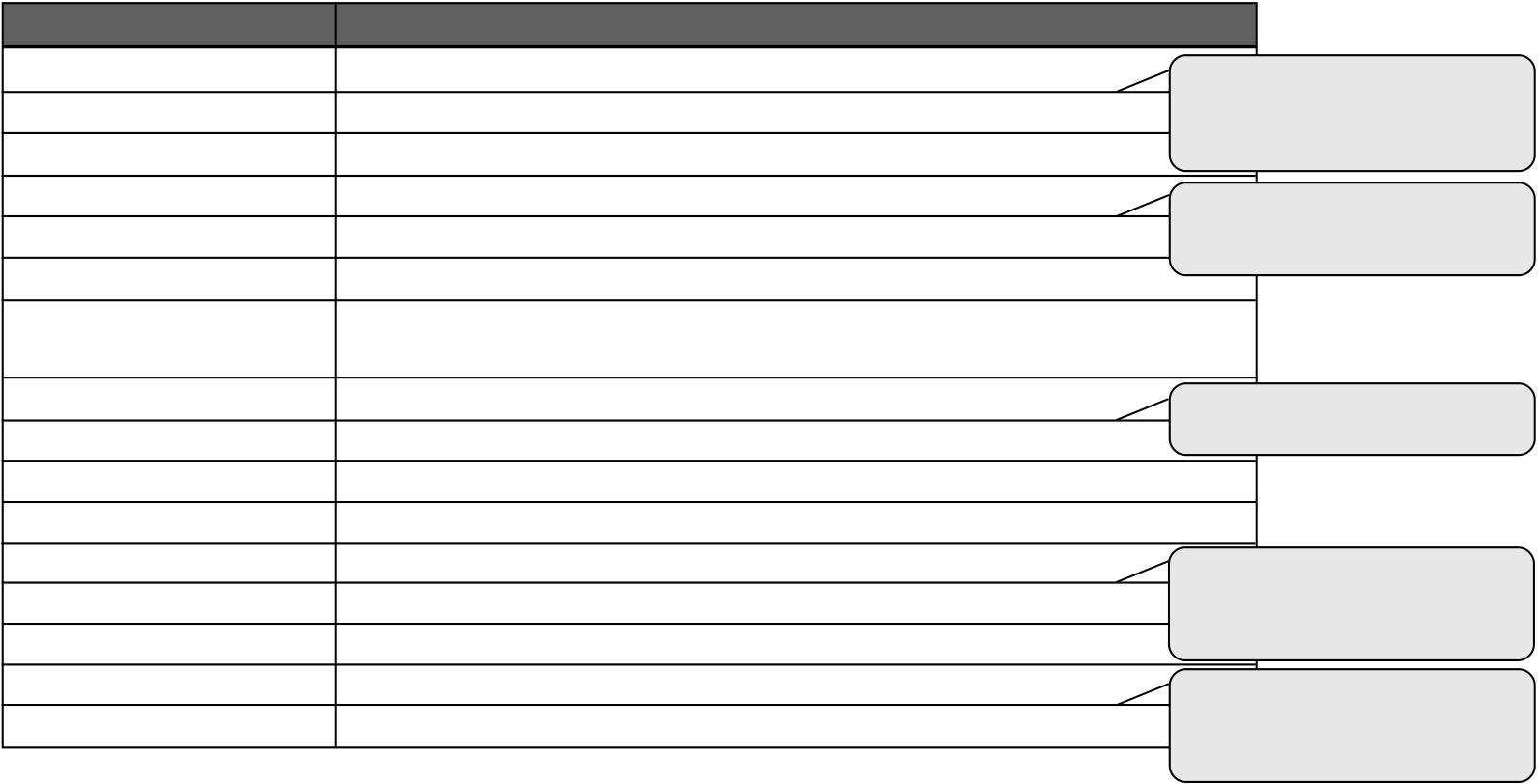
Game plan timeline
|
||
|---|---|---|
|
get started even earlier. | |
|
||
plan, and draft essays
My most meaningful work experience has been my four years with Hartman Energy. In describing my work experience to date, I will try to give details showing:
Ë A wide variety of experience in a relatively short amount of time.
| Ë | These are all great at- | |
|---|---|---|
|
Community involvement
Ë Demonstrate my interest in getting involved in my com- munity, when and where possible, despite keeping a busy travel/ work schedule.
Ë Highlight the leadership roles I have taken on (because engineers typically lack significant management expe-
| Ë | Again, great attributes to | |
|---|---|---|
| express. Admissions | ||
| counselors love appli- | ||
| cants who can demon- | ||
|
Academic history
I think the biggest challenge in the application process for most applicants is distinguishing themselves—I know this will be the case for me. Where possible, I will look to provide per-sonal information about myself; as Stanford puts it, “the per-son behind the grades, test scores, job titles, and leadership positions.” Through my applications, I hope to:
Ë Describe the unique set of experiences, interests, and per- spectives that I would bring to the b-school community.
Work experience
The work experience section allows you to document all of your professional ac-tivities, so that you can select the most pertinent experiences for inclusion in your ap-plication. You should document your explicit functional or project work in addition to any work-related extracurricular activities in which you’re involved. Additionally, try to include positive comments you’ve received during any of your reviews. These com-ments can be a great third-party reference that can be included in your essays or rec-ommendations. You should also consider including a section that outlines your strengths and weaknesses. This will give your recommenders a reference point for a question they most certainly will be asked. At the end of the section, you should include a copy of the resume you put together for one of your target schools.
Which schools?
In this section, you can provide detailed information on your target schools for the purpose of understanding how you will establish fit with each one. There are two types of information that you’ll want to include for each target school:
| Your MBA Game Plan | |
|---|---|
| 1. |
We’ve included Lauren’s approach to the second component as an example.
The London Business School
One of the largest b-schools among the Top 30, Kellogg enrolls some 600 students a year in its full-time program. Despite its size, however, Kellogg is able to create a unique, family-like culture through its team learning philosophy—one of the school’s biggest draws and differentiators in my opinion. I have always enjoyed a collaborative approach and have never needed a great deal of competition to motivate myself. For these reasons, I believe Kellogg is a perfect fit for me culturally.
Kellogg has an extremely well-balanced program. Although Kellogg is best-known for its marketing program, it actually offers one of the strongest arrays of functional depart-ments available anywhere. Most Kellogg MBAs major in two or three functional areas and can also opt to specialize in an interdisciplinary major. I would most likely major in strat-egy and finance and specialize in international business. I would also take advantage of the Global Initiatives in Management (GIM) program. Students in this program create specially-designed, two-quarter international independent study courses, and focus on a country of their choice. For each of the geographic areas, students work in groups to create a syllabus, book guest speakers, determine research topics, and identify key issues facing local industries. After coursework is completed during the winter quarter, students travel to the selected country over spring break for a two-week consulting project. Results are then presented to faculty and visiting executives in the spring. I would also take advantage of one of their exchange programs—most likely with HEC in France. Classes at HEC are conducted in both English and French, presenting an ideal opportunity for me to improve
Another strength is the school’s global management focus. International issues are integrated into the core courses and approximately 25 percent of Stanford electives focus on international topics. Stanford also provides career resources, speakers, student clubs, and conferences to help students connect with global companies.
Many of the global initiatives are provided through the Global Management Program (GMP). The GMP offers an academic certificate in global management for students (like me) who want to focus even more sharply on global issues. To earn the certificate, students complete at least five GSB electives with an international focus. I would definitely take advantage of this option. I would also pursue the Global Management Immersion Experi-ence (GMIX). This program combines a core course in global management, a research project, and a summer internship for students to gain international work experience.
Wharton offers a number of optional programs for its students. One option for first year students that looks particularly appealing to me is the Global Immersion Program (GIP). This program involves six weeks of introductory lectures on a country or region critical to the world economy, with a four-week overseas experience following final exams in which students meet corporate and government officials, tour local businesses, and attend cul-tural events. Students also submit a written assignment in the Fall. Another enhancement program that fits well with my overall career goals is the Multinational Marketing and Management Program. This program partners Wharton with b-schools in Israel, Canada,
|
|---|
Yes, assembling a game plan is time consuming, but an admittance letter is well worth the additional hours. It’s important, therefore, that you not only assemble a dy-namic game plan, but that you also execute it.
8 Truths of the Application Process
your target schools. You will be surprised what you pick up, and doing so will help you score big points with the admissions committee.
4. You will lose perspective and be tempted to make irrational decisions. A friend of Scott’s decided to try and save a couple bucks by sending in her recommendations via the regular mail only a few days before the dead- line. As you might have guessed, her documents were lost in the mail and she was denied admittance. If you continue to view b-school as a long- term investment, saving a couple bucks while taking on significant risk becomes an obviously bad tradeoff.
218 Your MBA Game Plan
7
| Game Over |  |
|
|---|---|---|
 |
Think about what this reader is faced with: A two-foot stack of applications that mostly look the same, a tight deadline, and the burden of having to decide whether an applicant should be admitted. You can help your cause by putting yourself in the reader’s shoes and thinking about how you can make his life easier:
Ë 218 K
At most schools a second reader—who also may be a student but is often an admis-sions officer—will read your application and grade it based on the same exact criteria. The second reader almost never sees what decision the first reader has made on your application, so you can be sure that you will get a fair shake. The second reader will come to a decision and also back up her findings with an in-depth report.
Usually, a third decision-maker then comes into play, someone who is a little more senior in the process. It may be the admissions director, or it may be a somewhat senior admissions officer. If the first two readers agree that you are a Yes or a No, then your fate is quickly sealed, for better or for worse. If they disagree, then the third person will usually read the application herself and come to a final decision. There is sometimes spirited debate about a single application, but remember that everyone involved is try-ing to get through a huge stack of applications as efficiently as possible. If the third reader still can’t decide, or the consensus seems to be “Maybe,” then often that is when you will placed on the waitlist.
|
|---|
Although the communication vehicle has changed, what hasn’t changed is the type of responses you can expect to receive.
Ë Waitlist.
Ë Denial.
If you find yourself torn between two or more schools, take an inventory of what mattered most to you when you initially applied. How do you feel about these criteria now? Visit the schools (we highly recommend attending each school’s on-campus events for admitted students) and get a feel for your potential future classmates. After all, these are the people with whom you may spend the next two years. Sit in on a class (even if you already did so months ago), and ask yourself if you could see yourself participating in the discussion. Yes, this sounds subjective, but your experience at b-school will largely depend on how well you fit the culture, and vice versa.
Of course, there are more tangible attributes to consider as well, such as each school’s reputation in your field of interest, its location, and how much money it offers you in scholarships or grants. First of all, don’t become too obsessed with rankings. If two schools are close to one another in rank, then this is a moot question. Don’t fool your-self into thinking that two or three notches in a magazine’s rankings mean a thing in the real world. However, if you are deciding between a top-five school and a top-30 school, for example, we recommend that you place as little emphasis on scholarship dollars as possible. Even if the lower-ranked school offers you a “free ride,” the money shouldn’t be your main reason for enrolling there. Yes, mountains of debt can be scary, but you really need to think long-term, and ask yourself which school will help you the most down the road. Greater career opportunities in the future are surely worth more than a few thousand dollars today. The same goes for other factors, such as geography. Re-member that business school is just two years, but the benefits that you take away will be with your for the rest of your life. So, don’t sell yourself short.
If your company offers you a big promotion or a once-in-a-lifetime opportunity to take on a new project, then you may want to think about pushing off b-school for a year. The biggest question to consider is whether it’s an opportunity that will come along again anytime in the near future. If you believe that your new role would allow you to gain rare new skills and experiences that will help you down the road, then seriously consider it. If, however, your company is just trying to keep you around for another year by offering you more money or a better title, don’t be so quick to defer your enrollment. Yes, the money can look good, but maintain a perspective that ex-tends 20 years into the future. Earning those extra bucks today pales in comparison to the opportunity cost of waiting another year to accelerate your career.
Some people face personal reasons for wanting to defer their enrollment, such as the birth of a child or an illness in the family. If you are faced with a situation that you believe will make it hard to devote 100 percent of your energy to your MBA, then consider deferring. Remember, though, that it’s easy to think of any time as a bad time to start business school (something always seems to come up). So, only defer if you are sure that your personal circumstances will look significantly different in a year.
Schools tend to be a little more willing to listen to personal reasons for deferment because they know that business school will consume your life once you arrive. Hon-estly let the school know your situation and explain why you are afraid that it may interfere with your business school experience. Schools will usually be very understand-ing, and will work with you to find a solution. They may not offer you a deferment, but they may at least be able to offer you other options, such as the chance to start during the school’s January term.
In any case, be prepared to do some convincing, both via letter and over the phone. Even though many schools tend to be a little more lenient than they let on, many appli-cants who ask for deferments are not granted them. Also, you will definitely be ex-pected to submit your initial tuition deposit (usually on the order of $1,000 to $2,500) now in order to hold your spot in next year’s class. This deposit is non-refundable, so be prepared to kiss it goodbye if you decide next year that business school isn’t in your plans after all.
Assuming that you will need an external source of loans (most students do), there are a few programs in place that make it relatively easy to get money for your educa-tion. While your financial situation may not qualify you for grants from the school, you may be eligible for Stafford loans from the federal government. These come in two types: subsidized and unsubsidized. Although you won’t have to start paying off either type of Stafford loan while you’re in school, subsidized loans are preferable, because interest doesn’t accrue until you graduate. Naturally, subsidized loans are harder to qualify for. How much you’re eligible to receive and the type of Stafford loan you can get depends on your financial situation (as dictated by your FAFSA results). Who actu-ally services your Stafford loan (who cuts the check) can be anyone from your school to a third party bank such as Sallie Mae. Shopping around can help you save on fees and interest rates.
You’ll also have private loan options. Many schools partner with a major bank like Citigroup to offer “preferred” student rates on loans. They are usually fairly competi-tive, although with some shopping around you can often find a better deal on your own. These loans are usually structured so that you don’t start paying them back until you graduate. For American students, these loans tend to be very easy to qualify for, but international students generally have to provide detailed, verifiable proof of assets in order to qualify.
|
|---|
requirements and timelines, so you can select those scholarships that suit you best. FastWeb will also continuously send you updates as the year progresses and new schol-arships become available.
There are two things to be aware of, though. First, because you don’t know what schedule your local college operates on, start researching your options as soon as pos-sible to avoid missing an enrollment deadline. The sooner you can take a class to pass your requirement, the better. Second, you should know that you will have to take these courses on your own dime. So, add these costs into your budget as you plan for business school.
Admission With Postponement
The first step you should take is to understand your target school’s policy on the waitlist. Most schools will provide you with a contact within the admissions office who will hopefully be your main advocate in helping you gain admissions. If you haven’t already guessed, it’s important to get this person to like you, so use tact in your commu-nications. The second step you should take is to review all of your application materials in order to evaluate why you weren’t directly admitted. The fact that you’ve been placed on the waitlist means that you’re a solid applicant, but there must be at least one aspect of your story that came across as a little weak.
Run down this list of questions when evaluating what your weaknesses might be.
Ë In what ways do I emphasize fit with the b-school in my application?
Ë How do I demonstrate leadership, innovation, maturity, and teamwork abilities?
After running through the list, if you’re still not sure what your weakness is, con-sider having a friend, student, or alum read through your application, asking the same questions. Sometimes having an outside perspective can help you recognize weaknesses of which you were previously unaware. For example, you might think your career goals are crystal clear, while others who read your application are confused about what you’re trying to communicate. Naturally, this sort of analysis should be done even before you submit your application, but it can be extremely helpful in crafting your messages when trying to get off the waitlist.
Once you’ve identified the areas that you would like to strengthen in the eyes of the of the admissions committee, you should select the methods you would like to utilize in your approach. Some of the methods that successful applicants have utilized
Ë An additional recommendation: Sending an additional recommendation can be a great way to emphasize character strengths that the target school values. Coming from a third party, it contains all of the benefits that your initial recommendations contained. Having reviewed your application for potential weaknesses, you can work with the additional recommender in focusing on those perceived weak areas. If, for example, you think that the admissions committee might question your quantitative abilities, your recommender could discuss a rigorous analytical analysis that you recently completed. Ideally, this recommender is an alum of the b-school. Because it’s a more targeted recommendation than the originals, it is not a neces- sity that the recommender know you as well. What you’re shooting for is a recommendation that persuades the admissions committee that you have the requisite abilities and that you would be a great addition to the cul- ture. Certainly an alum can speak most effectively to the second objec- tive. Of course, if you don’t have access to an alum, a targeted recommendation from someone who can write convincingly about your qualifications is adequate.
Ë A business course or an improved GMAT score: Depending on when you hear back from your target school, this method may or may not be option. Given time, however, you might want to consider taking a business course or retaking the GMAT if you get the sense that the school has some res- ervations about your academic ability. In some cases, a school will actually allude to the fact that you will need to display more academic prowess in order to get off the waitlist. If you go down either or both paths and per- form well, this is a great way to push yourself over the top.
Sean’s follow-up letter
The purpose of this letter is to further support my candidacy for admission to Top Business School (TBS). In short, attend-ing TBS would be the perfect “next step” as I progress toward
|
|---|
Professional progress
I recently completed a project involving an IT value assess-ment of a large pharmaceutical company. I played an integral part in determining the economic value added (EVA) of the corporation’s IT expenditures. In order to determine how to better manage IT costs and enhance value to end-customers, I instituted a process that allowed the team to analyze IT cost drivers and distinguish between non-core and core IT functions. After careful review of the client’s current technical solution evaluation processes, I developed a standard technical solu-tion implementation methodology tailored to the demands and requirements of the company. To further enable the client to effectively manage IT expenses while maintaining market share, I created an IT competitive positioning strategy.
Currently, I am working with a core team of employees who recently formed SimTech’s pharmaceutical group. In the last few months, my group has released Pharmtek. Pharmtek is a pharmaceutical industry-specific information technology solu-tion package that is expected to experience rapid market growth over the next five years. To maximize our relationships with po-tential customers who might be interested in the Pharmtek so-lution, my team is focused on generating sales, recruiting and training skilled resources, developing external marketing cam-paigns, and generating support materials for sales teams. One of my primary tasks on this project has been to conduct research on major pharmaceutical industry trends. My research has fo-cused on Customer Relationship Management (CRM), supply
| Game Over | 229 |
|---|
Global perspective
|
|---|
in community service activities. Upon graduating from Adams University, I decided to participate in the Big Brothers Big Sis-ters (BBBS) program, which pairs adults with at-risk children from single-parent households. In January of 2000, I was matched with twins. As a Big Brother, it is impossible to count the number of ways that I had an impact on my Littles’ lives. Over the course of our relationship, I have tried to instill the value of education and the desire to achieve a college degree. In addition to the impact that I have had on the boys, they have taught me not to always take myself so seriously. I would say that it has been a mutually beneficial relationship.
Natural affinity with TBS
| Game Over | 231 | ||
|---|---|---|---|
|
Below I have listed additional specific TBS resources from which I could benefit.
Faculty with similar professional interests:
| Ë |
|
|
|---|---|---|
| Ë | ||
| Ë | ||
| Ë | ||
| Ë | ||
| Ë |
|
|
| Ë |
|
|
| Ë | ||
| Ë | ||
| Ë | ||
| Ë |
|
|
| Ë |
|
|
| Ë | ||
| Ë | ||
I am pleased to have been admitted to the waitlist and can assure you that if I am admitted to TBS, my unique background and strong spirit in the areas of culture, professional knowl-edge, academics and community involvement will supplement the TBS environment and experience. I look forward to joining you in August.
Sincerely,
First, it’s important to realize that the world isn’t going to come to an end. Apply-ing to top business schools is inherently a competitive process and odds are that you will receive at least one denial. Second, you should take some time to evaluate your application using the questions in the section on the waitlist. It’s important that you identify how you went astray in case you decide to reapply. Along those lines, a large number of schools offer personalized feedback to applicants who are not granted ad-mission. Take advantage of that even you’d prefer never to hear the b-school’s name again. Applicants generally find these feedback sessions to be useful and those that incorporate the feedback into the following year’s application often achieve admit-tance. In general, rates of admission for reapplicants are higher, but usually not by more than a few percentage points.
With respect to reapplying, you may face a situation in which you are admitted to one of your target schools but are still considering reapplying to a school that was higher on the list. If you are confronted with this situation, then you should ask yourself whether the b-school to which you’ve been admitted will provide you with an opportunity to achieve your career goals. If the answer is no, then you shouldn’t have applied to the school in the first place. Just make sure that you don’t pass on an option that would allow you to achieve your goals so that you can potentially attend a “more prestigious”business school in the future.
| Game Over | 233 |
|---|
|
|
|---|
Anderson Graduate School of Management, 171-173
application strategy, 172-173
insider information, 173appendix to game plan, 213
Brown, conversation with Alex, 28-30
b-school
classroom, 44-45
decision, the, 14-17career paths of graduates, 133
Carnegie Mellon University Graduate School, 134-136
application strategy, 135-136
insider information, 136
Columbia Business School, 136-139 application strategy, 137
combination and permutation problems
competition, understanding the, 9 School
components, the application, 48-49
Computer Adaptive Test (CAT), 54-55 consistent profile, 10
consulting applicant, 33
controversy over rankings, 127D
essay, 88-90
questions, 78
exam strategy, become familiar with, 61 executive MBA program (EMBA), 15 executive programs, 15-16failure essay, 99-101
FAQs, 17-18, 30-31, 45-46, 120-124, 205 final thoughts on essays, 103-104Business finance applicant, investment banking
direct admission, 220
discouraged, don’t get, 62
distance-learning program, 15
diversity essay, 95-97
Duke University. See Fuqua School offormat and content of TOEFL, 65-66 four dimensions of a perfect applicant, 19-21 full-time program, 14
Fuqua School of Business, 143-145
application strategy, 144-145
|
||
|
||
Kellogg School of Management, 162-164 application strategy, 163
insider information, 164
Kenan-Flagler Business School, 183-185
application strategy, 165-166 insider information, 166
|
|
|---|
Marshall School of Business, 190-192 application strategy, 191-192
insider information, 192
Massachusetts Institute of Technology. See Sloan School of Management
application strategy, 8-11 trends, 11, 203-205
McCombs School of Business, 192-194
Quantitative score, 55
Quantitative section, 52-53
questions
about business school, 74-75 about experiences, 75-76N questions, advanced, 62
resume, 112-116
content, 113-114
format, 113
sample, 114-116application strategy, 160-161 insider information, 161-162
|
|---|
Test of English as a Foreign Language
science applicant, engineering and, 35-36 (TOEFL), 65
insider information, 180 U.S. News and World Report rankings,
sniper camp, the, 131 128-129
University of California at Los Angeles.
University of Western Ontario. See Richard Ivey School of Business
University of London. See London Business School (LBS)
University of Maryland. See Robert H. Smith School of Business
180-183
application strategy, 181-182 insider information, 182
University of Pennsylvania. See The Wharton School
University of Rochester. See William E. Simon School of Business
| 240 | Your MBA Game Plan |  |
|
|---|---|---|---|
| About the | |||
| Authors | |||
 |
Omari Bouknight is a second-year MBA student at Harvard Business School. He studied the business school application process for more than five years in preparation for his own attempt to gain acceptance into a top program. Utilizing application strat-egy, Omari received admission to Fuqua, Harvard Business School, Kellogg, Univer-sity of Michigan Business School, and Wharton. Omari’s professional experience consists of more than three years with Deloitte Consulting as a management consultant, assist-ing companies in developing and implementing business strategies. Omari received a Bachelors of Arts from Michigan State University as a triple major in International Relations, German, and Supply Chain Management.
Ë 240 K